September 2026

Where I stand, first
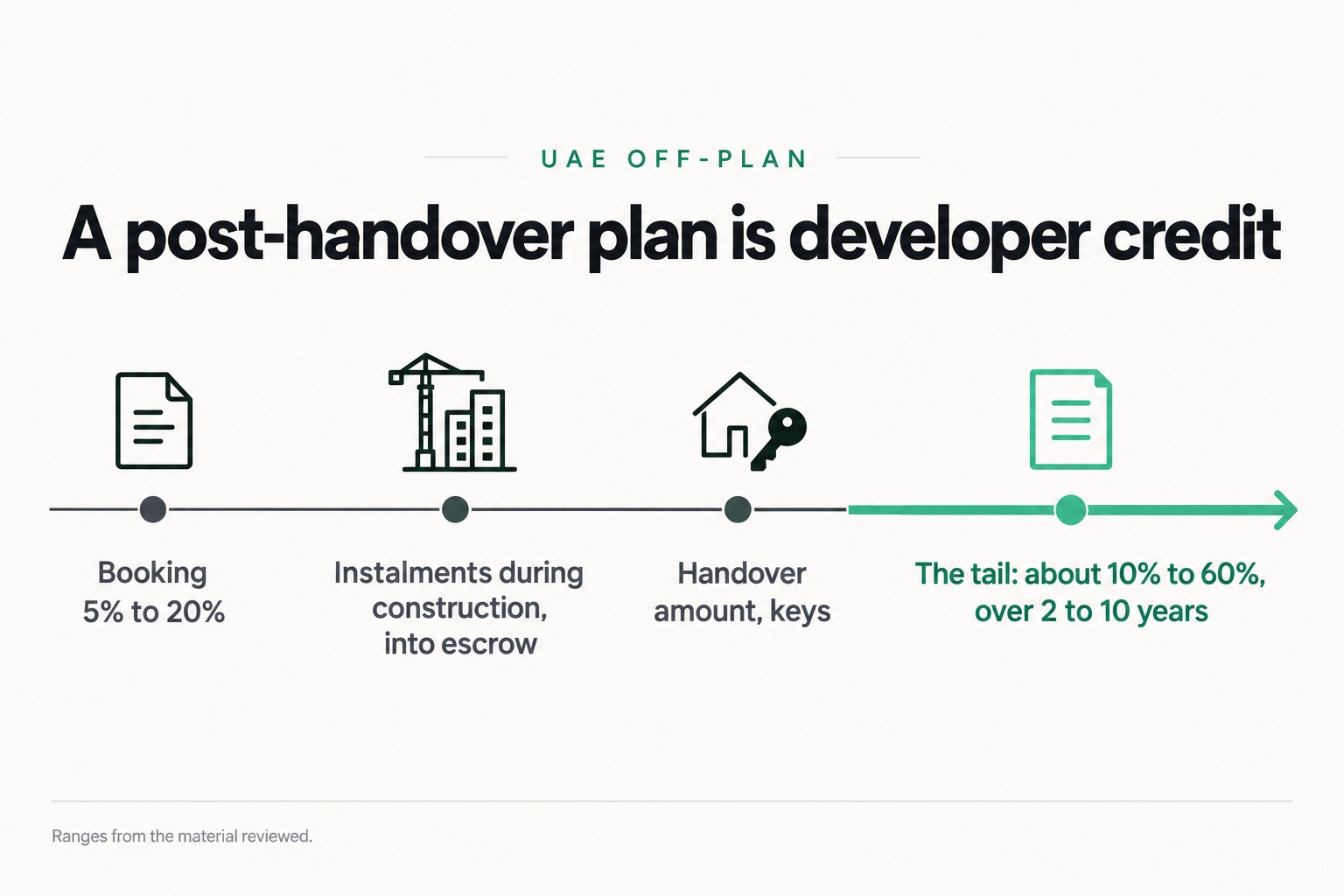
I sell off-plan property. A lot of it is sold on payment plans, and some of those plans carry a long tail after handover. So when I write about post-handover plans, I am writing about something I sell, and you should read it knowing that.
I am not going to tell you they are good or bad. They are credit. Credit is useful to some people and expensive for others, and the only way to know which you are is arithmetic. This is about a piece of arithmetic I had been doing wrong.
The premium
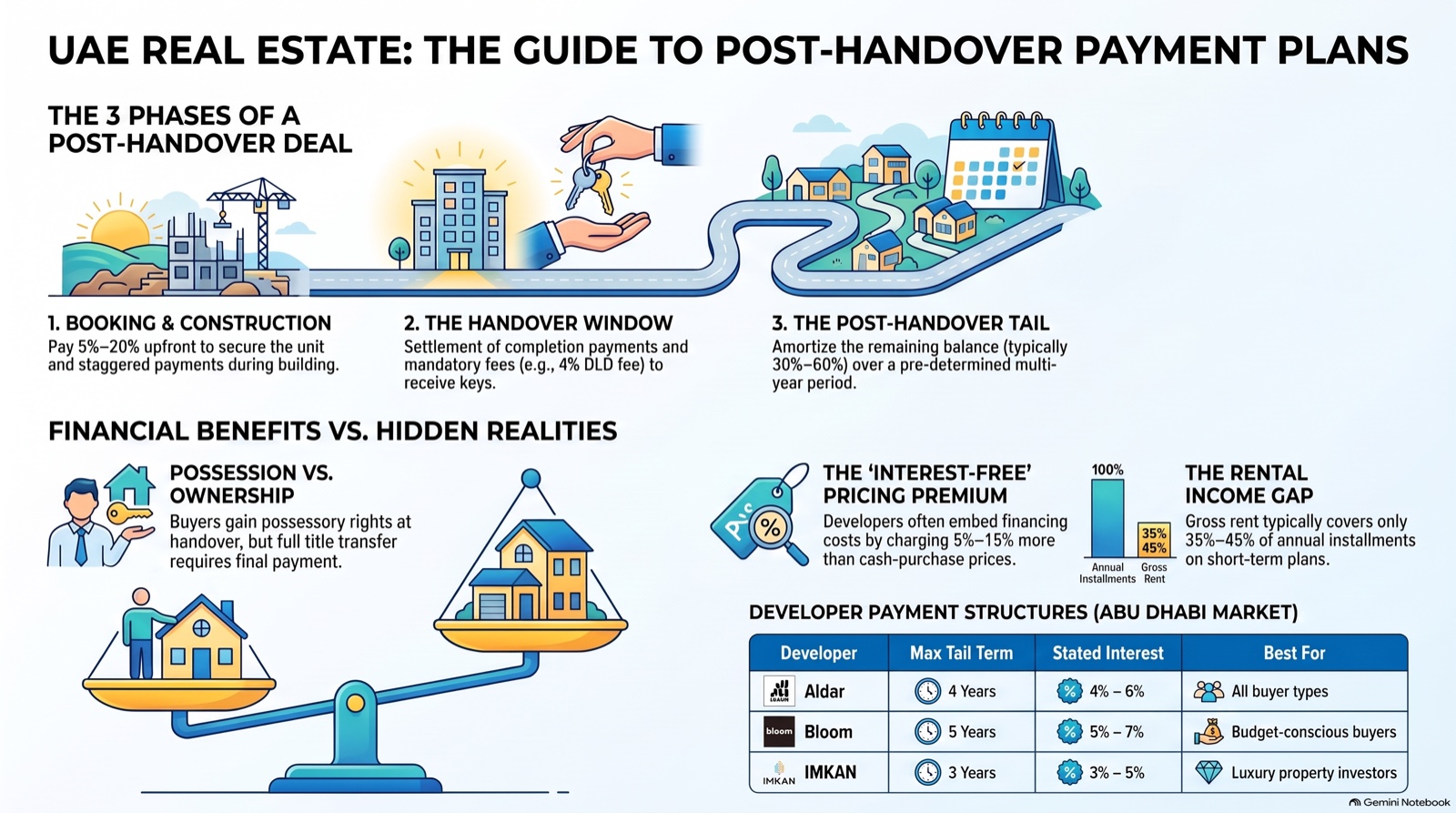
Everyone who has looked at these plans knows that a unit on a long plan often costs more than the same unit paid for faster. I knew it. I would tell buyers: the plan price is maybe ten per cent higher, that is the cost of the flexibility, decide whether it is worth it to you.
That sentence is not wrong. It is incomplete in a way that matters.
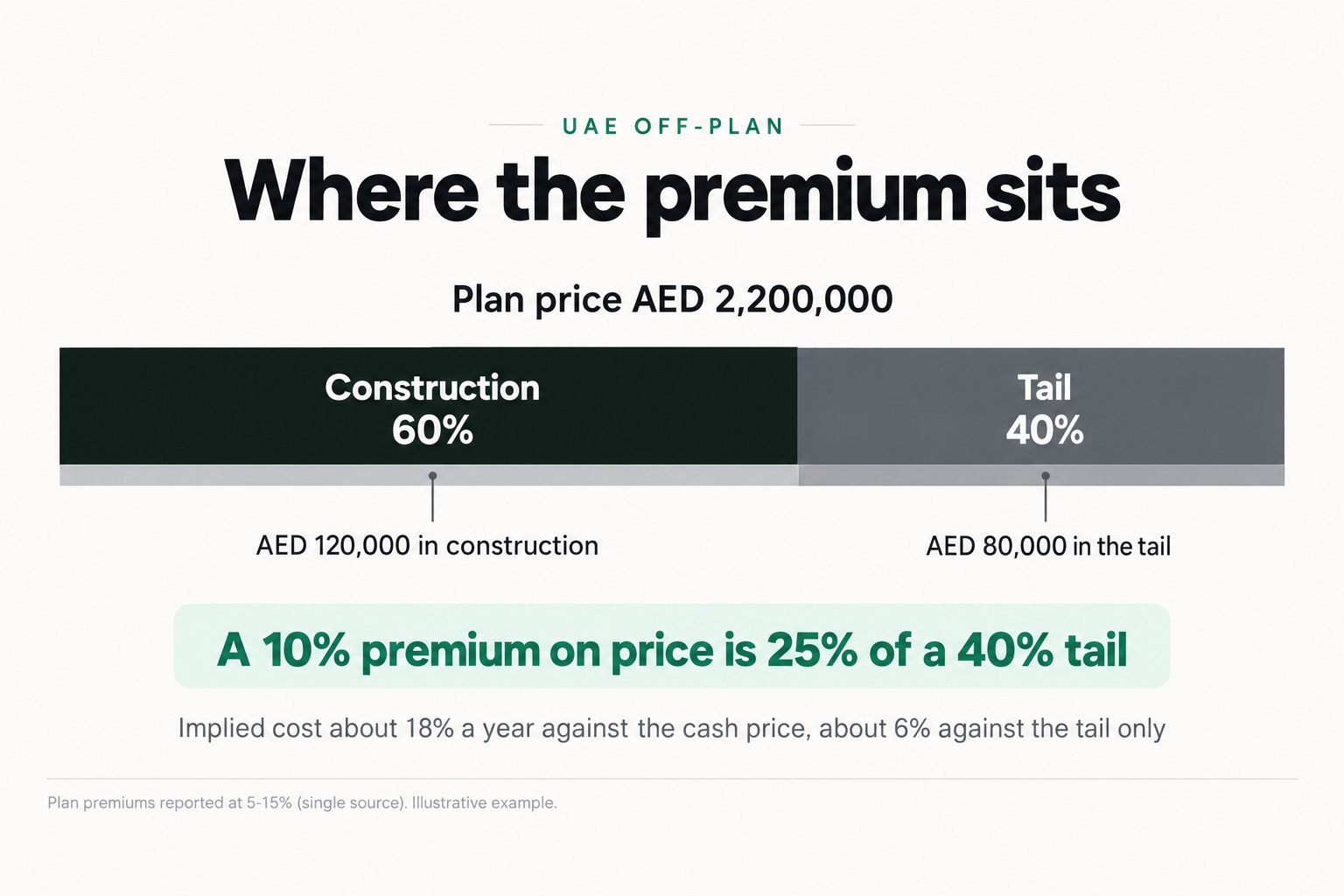
A ten per cent premium is charged on the whole price. But the credit you are buying only covers the part you pay after handover. On a plan with forty per cent after the keys, ten per cent of the price is twenty-five per cent of the credit.
I had been measuring the premium against the price. The right thing to measure it against is the amount you are borrowing.
Then it got more interesting. On one illustrative case from my research, sixty per cent of the premium is paid during construction, before any post-handover credit exists at all. Depending on what you compare with, the same premium implies something like six per cent a year or something like eighteen. Same unit, same headline, a threefold difference, and the only thing that changes is the baseline.
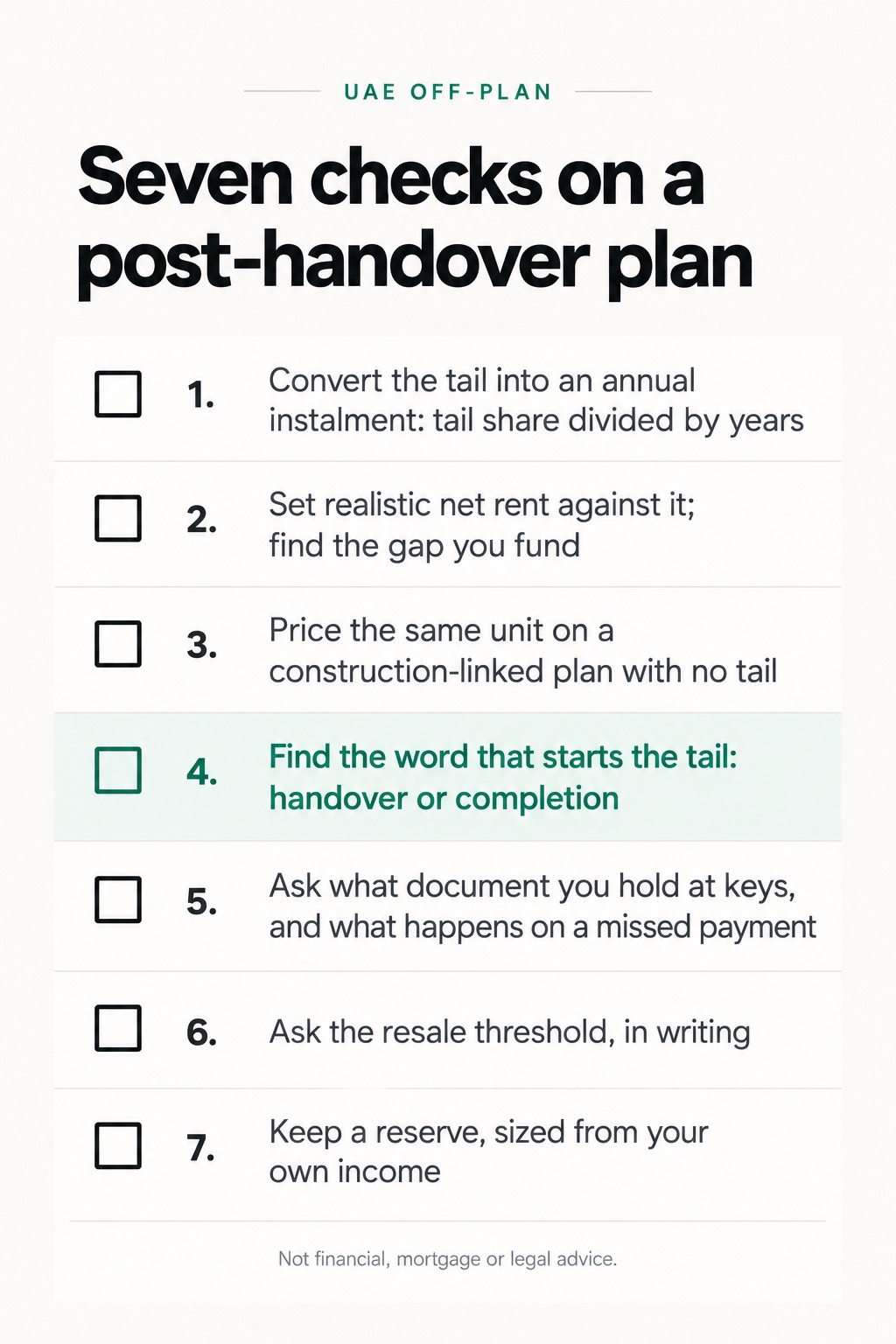
So I have changed what I ask. Not "what is the premium", but "what is this unit on a construction-linked plan with no tail". The difference between those two prices is what the tail costs. Then you can compare it with anything: a bank quote, a plan with a stated rate, or simply what else you would do with the money.
Sometimes that comparison favours the plan. I have seen buyers for whom it is the right structure: people with strong income, no appetite for a bank, and a good use for the capital they keep. The point is that you only find out by pricing the credit, not the unit.
The rent
The other line I have heard many times is that the tenant will pay the plan off, and I have let it pass in conversations without challenging it. [Idris to confirm this line.]
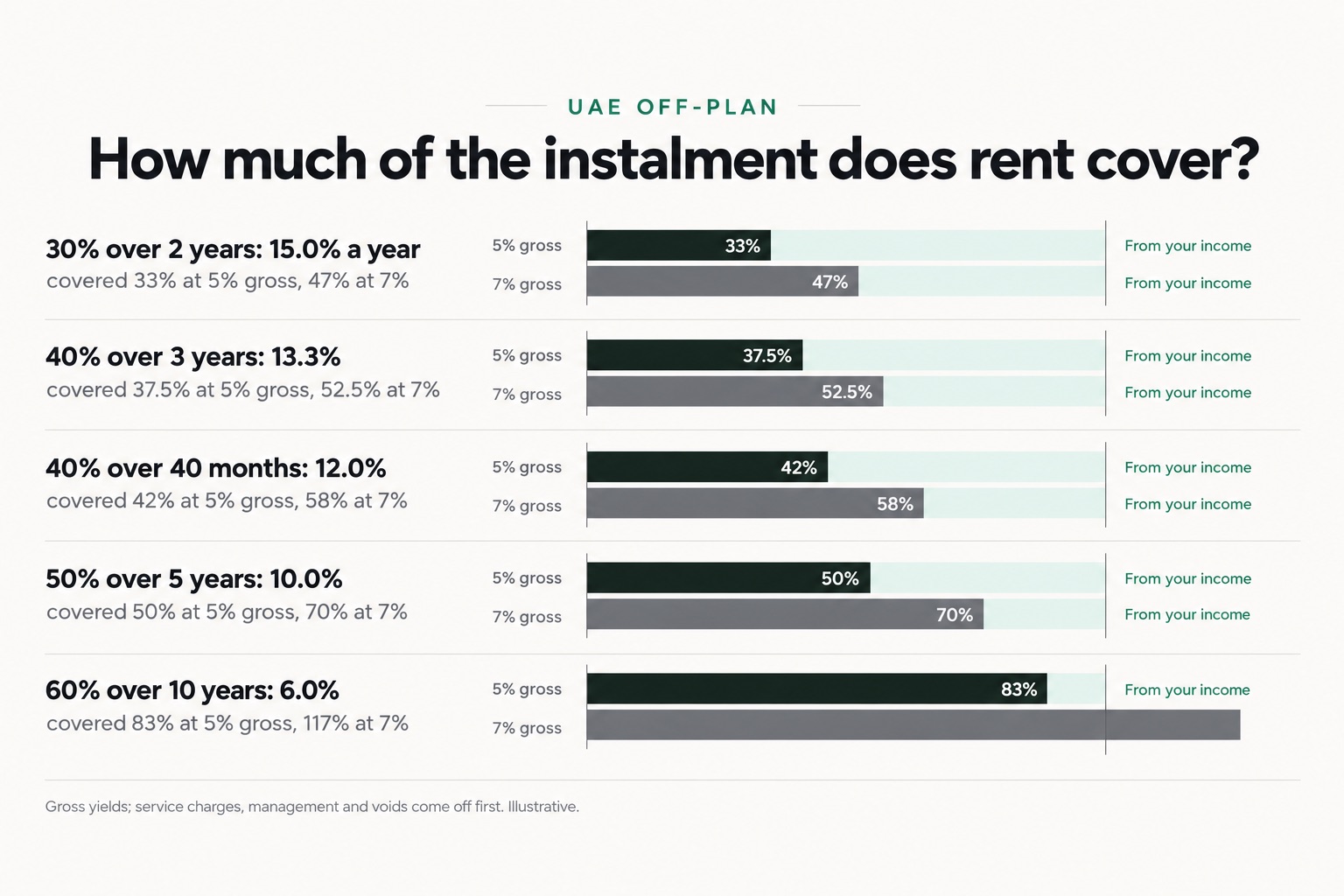
It is one division. Take the tail, divide by the years. Forty per cent over three years is thirteen and a third per cent of the price every year. Put gross rent against it. At five per cent, rent covers thirty-seven and a half per cent. At seven per cent, a bit over half. And that is before service charges, before management, before the months it sits empty after handover.
For rent to cover a forty per cent tail at five per cent gross, the tail needs to run eight years.
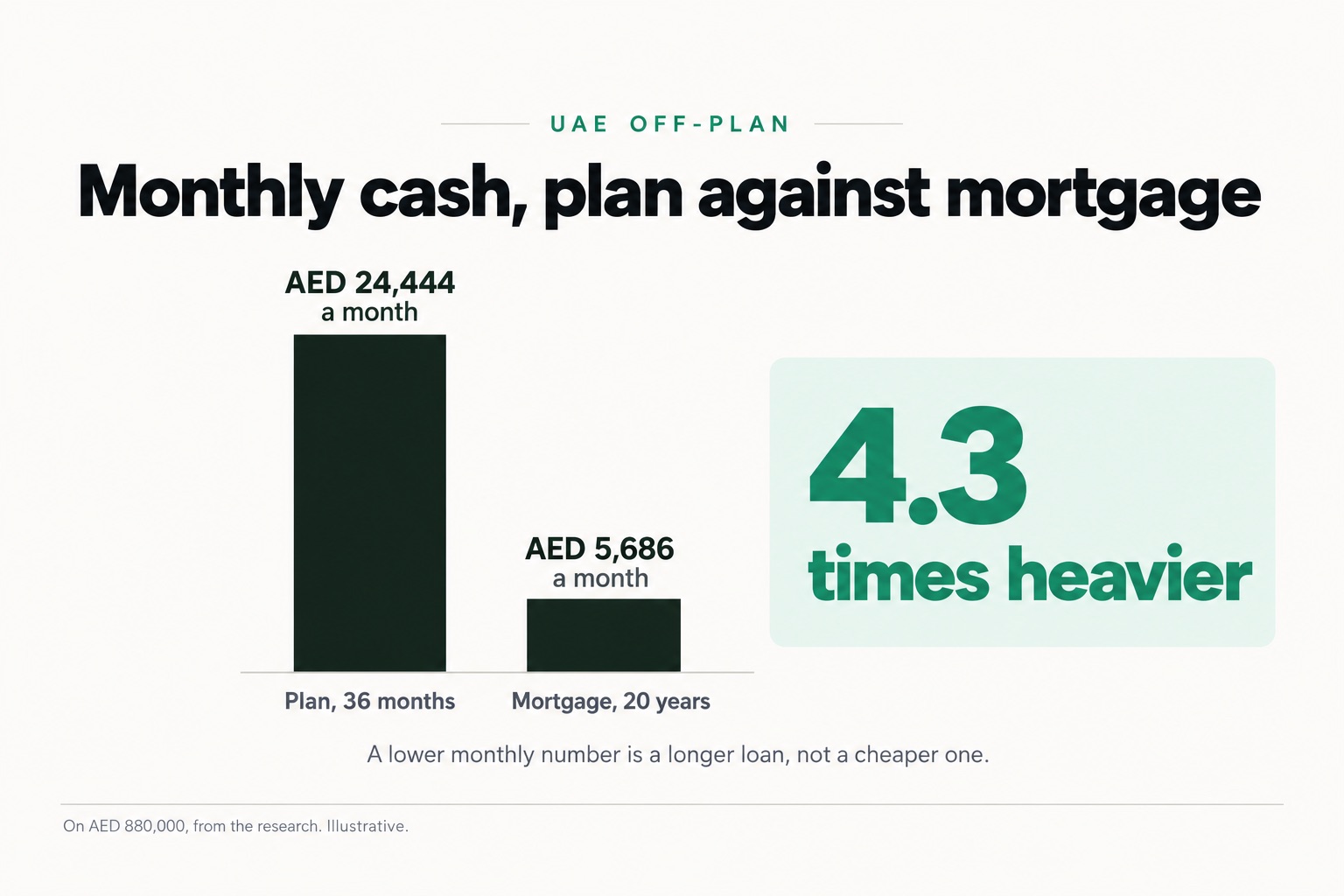
None of that is hidden. It is just rarely written down. When it is written down, the conversation changes from "will this pay for itself" to "how much of my salary goes into this every month, and for how long". That is a better conversation and I should have been having it earlier.

The part I cannot answer
Here is the thing I went looking for and did not find.
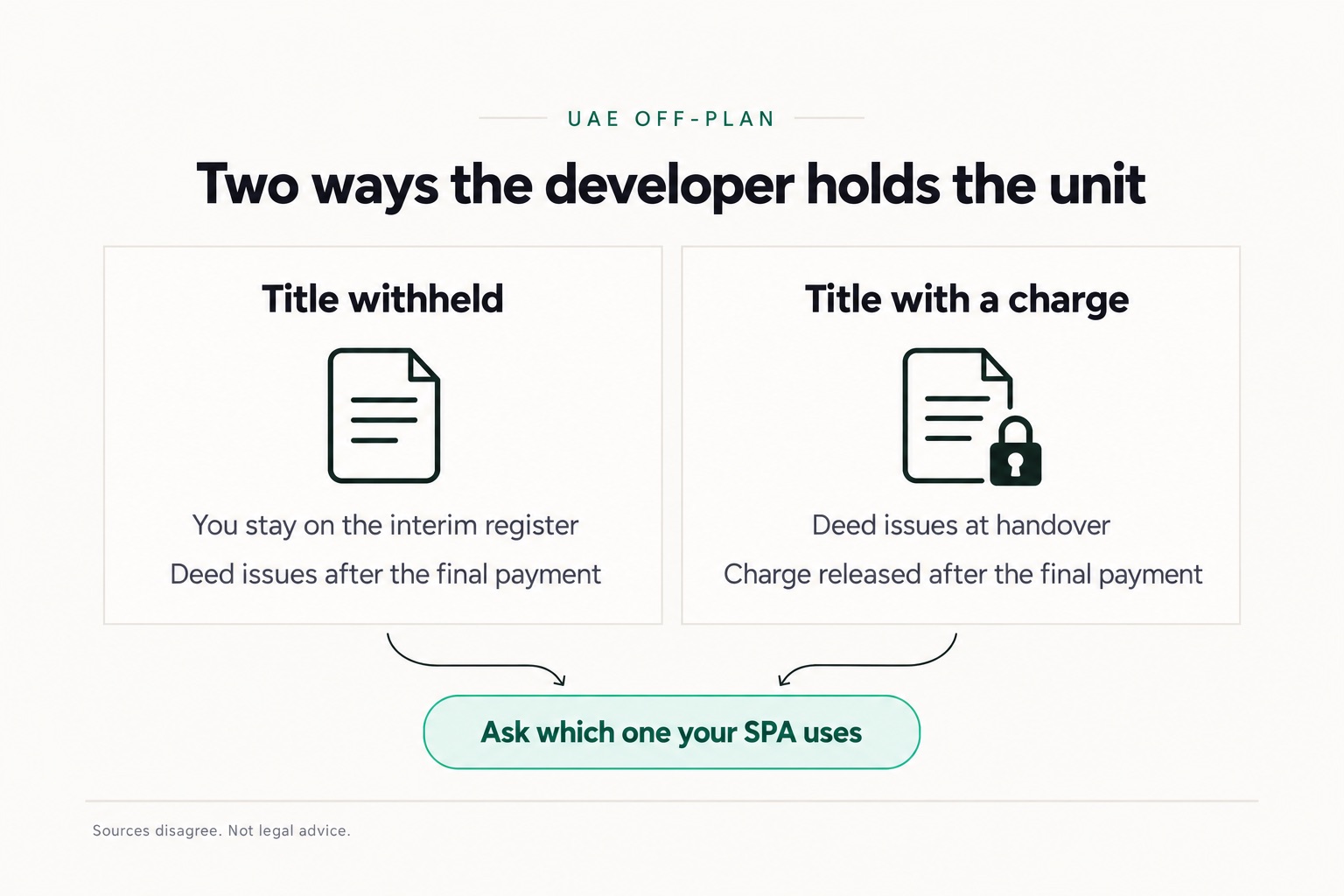
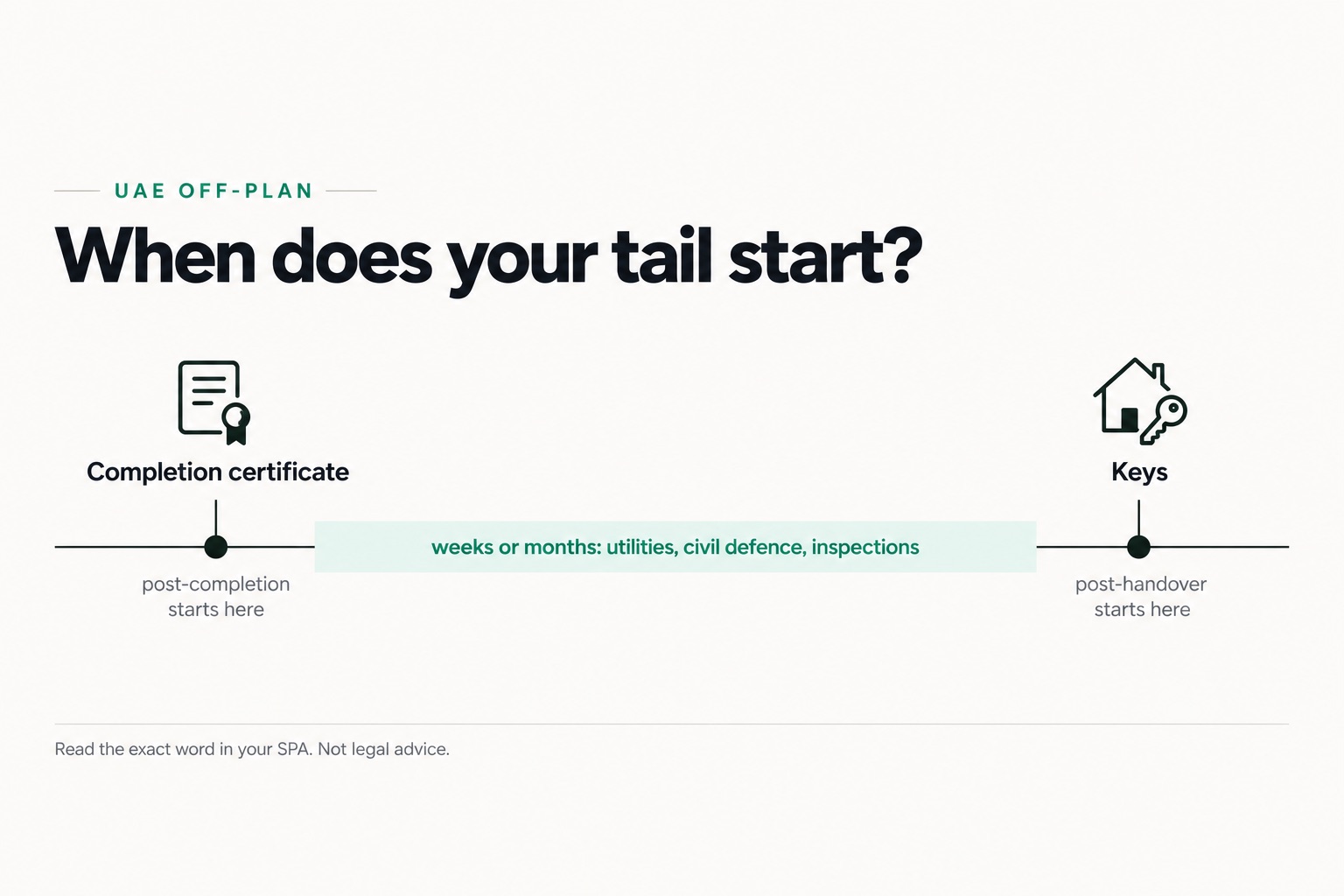
During the tail, you have the keys but you do not own the unit outright. The developer keeps security over it. I assumed I knew how: the title deed waits until the last payment. One of my sources says exactly that. Another says the deed is issued at handover with a developer charge registered against it.
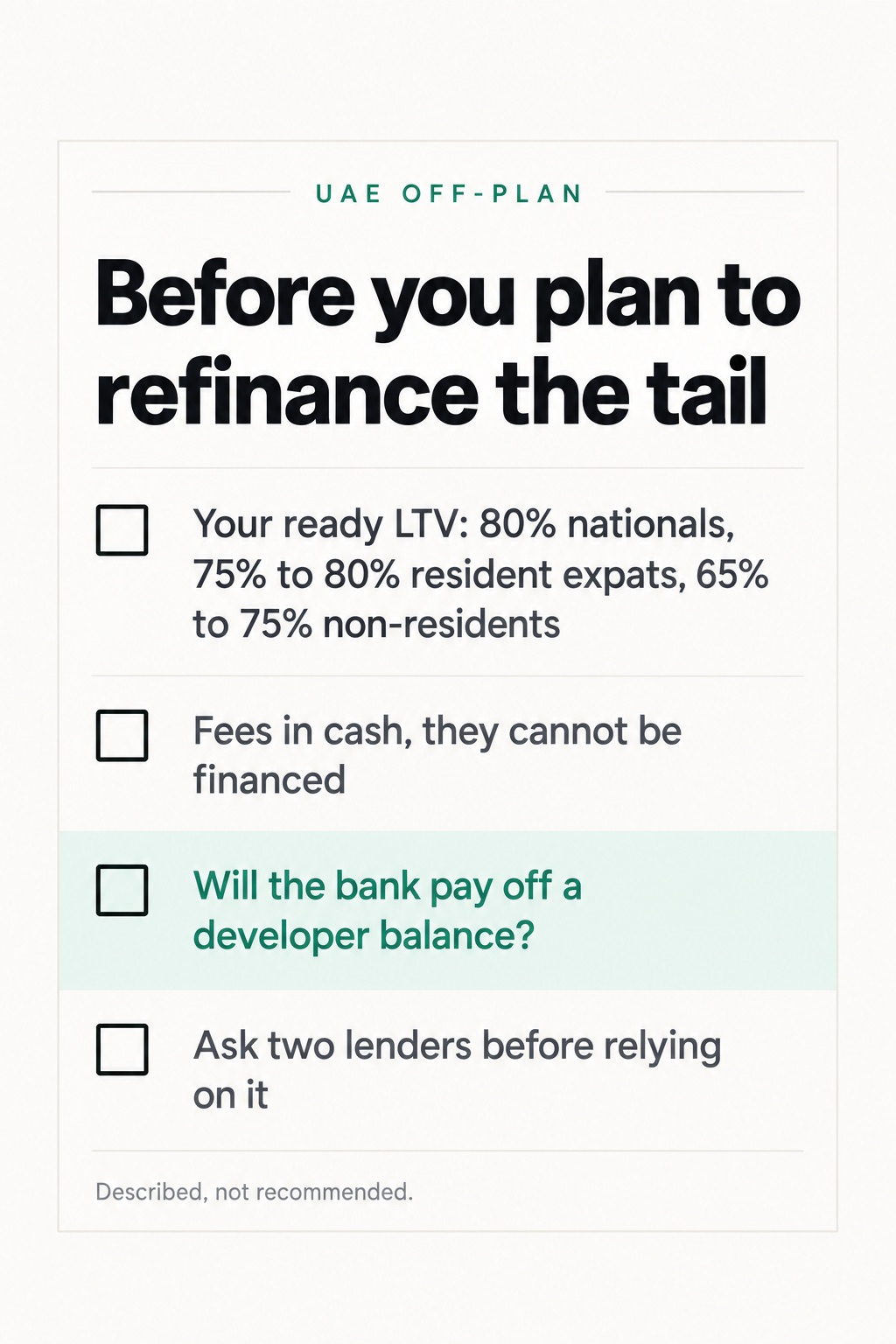
Those are different positions. They affect what you hold, what a default looks like, and whether a bank can step in to refinance. And I could not settle it from anything official. I had been confident about it for years and my confidence turns out to have been based on how the deals I happened to see were done. [Idris to confirm this line.]
So I have stopped asserting it and started asking it, in writing, on every deal: what document will my client hold on the day they get the keys, and what happens to it if they miss a payment. Then a lawyer reads the answer.
What I take from it
Two things.
Price the credit, not the product. A payment plan is a loan with a property attached. The useful numbers are the ones a lender would ask about: how much, for how long, at what cost, secured how. The price per square foot is almost the least interesting number on the page.
Be suspicious of what you are sure of. The two things I would have said most confidently about these plans, that the premium was about ten per cent and that the deed waits for the last payment, both turned out to need a second look. Neither was wrong exactly. Both were the version I had seen, and I had been treating it as the version that exists.
I would rather ask the question on every deal than assume the answer on one.
Idris Dad writes about off-plan strategy across Dubai, Abu Dhabi and Ras Al Khaimah.
More on how I work with buyers at offplancrypto.com.
Nothing here is financial, mortgage or legal advice. I am a licensed real estate broker, not an adviser or lawyer, and I sell off-plan property including on payment plans. No developer or project is named.