September 2026
I have used the line
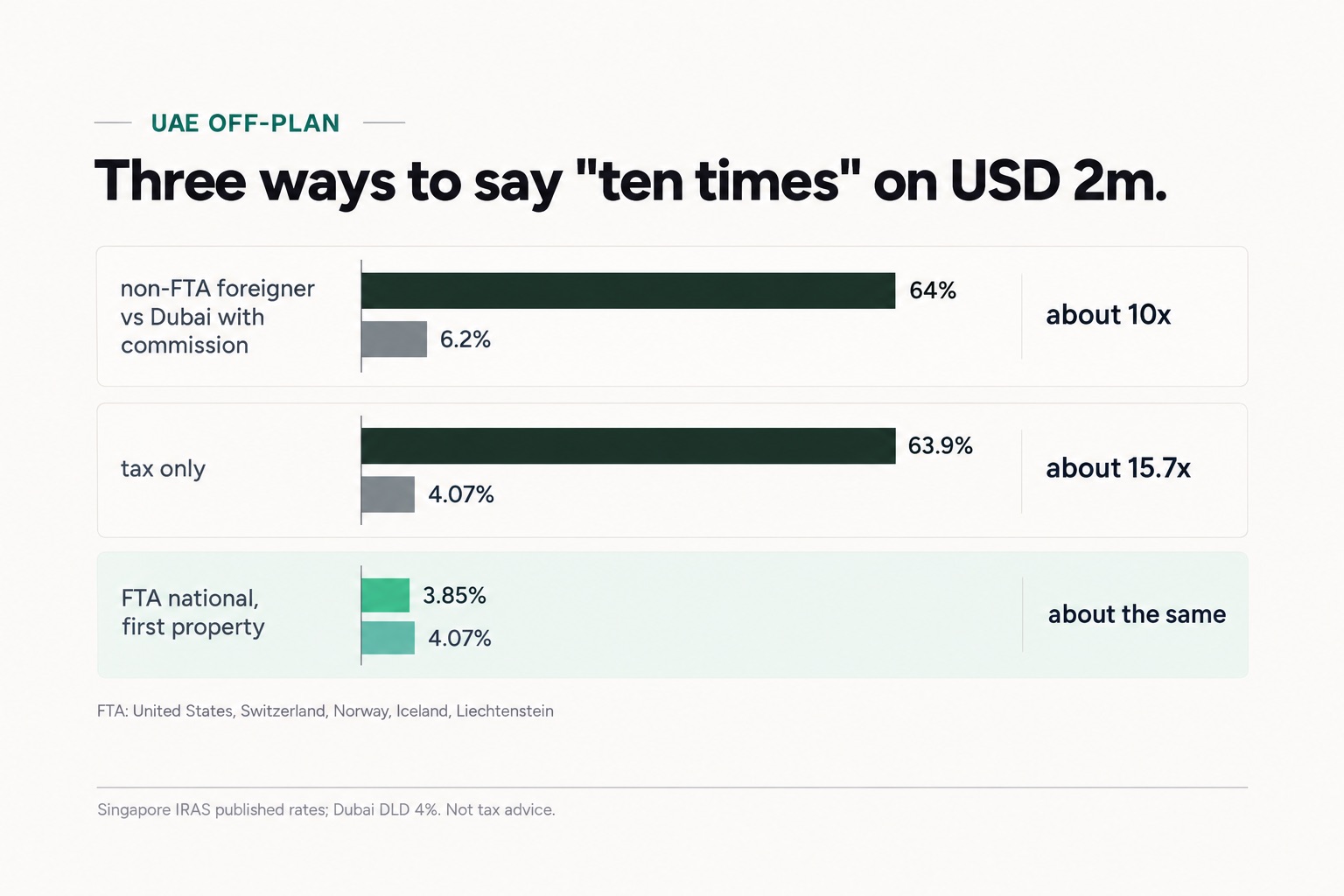
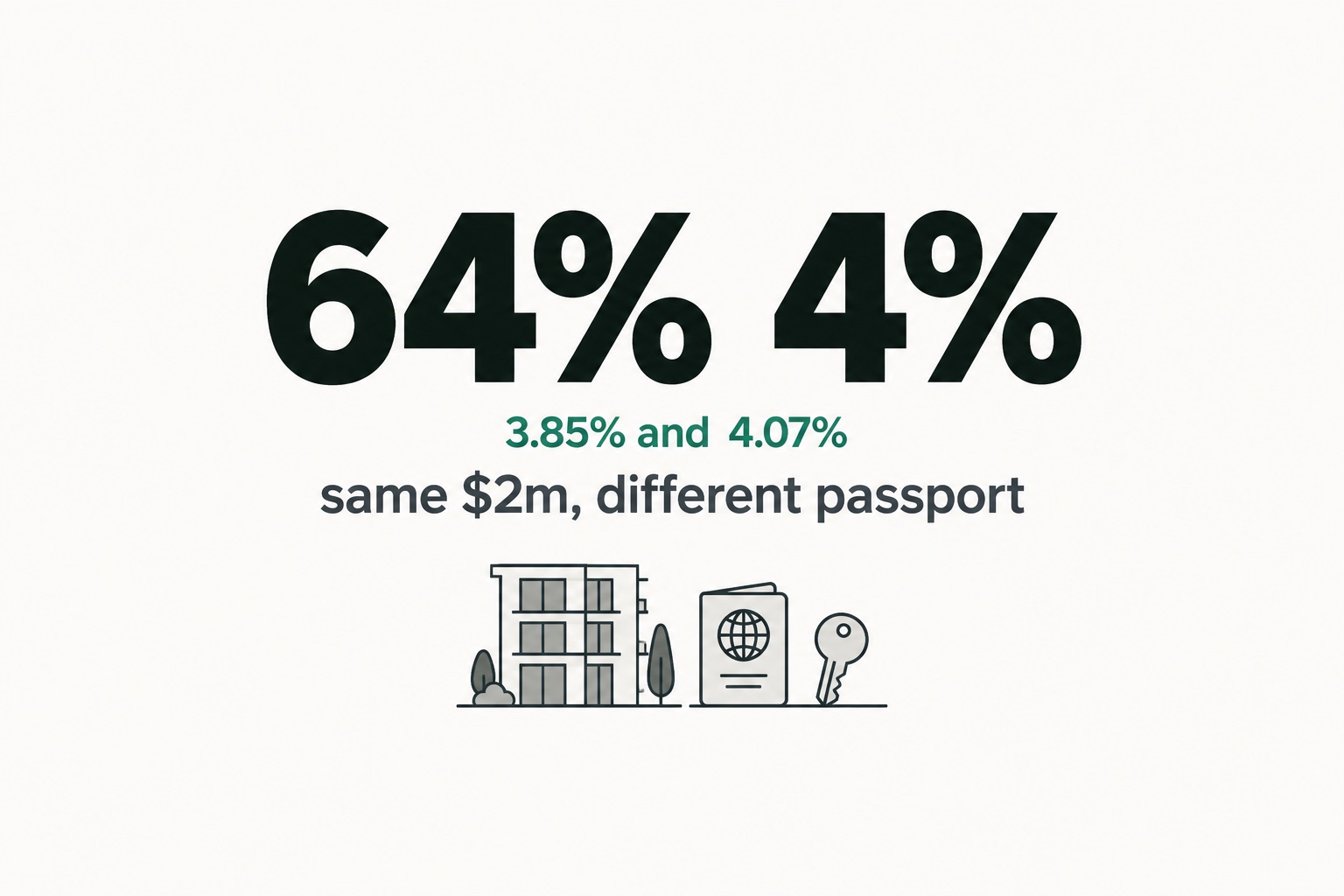
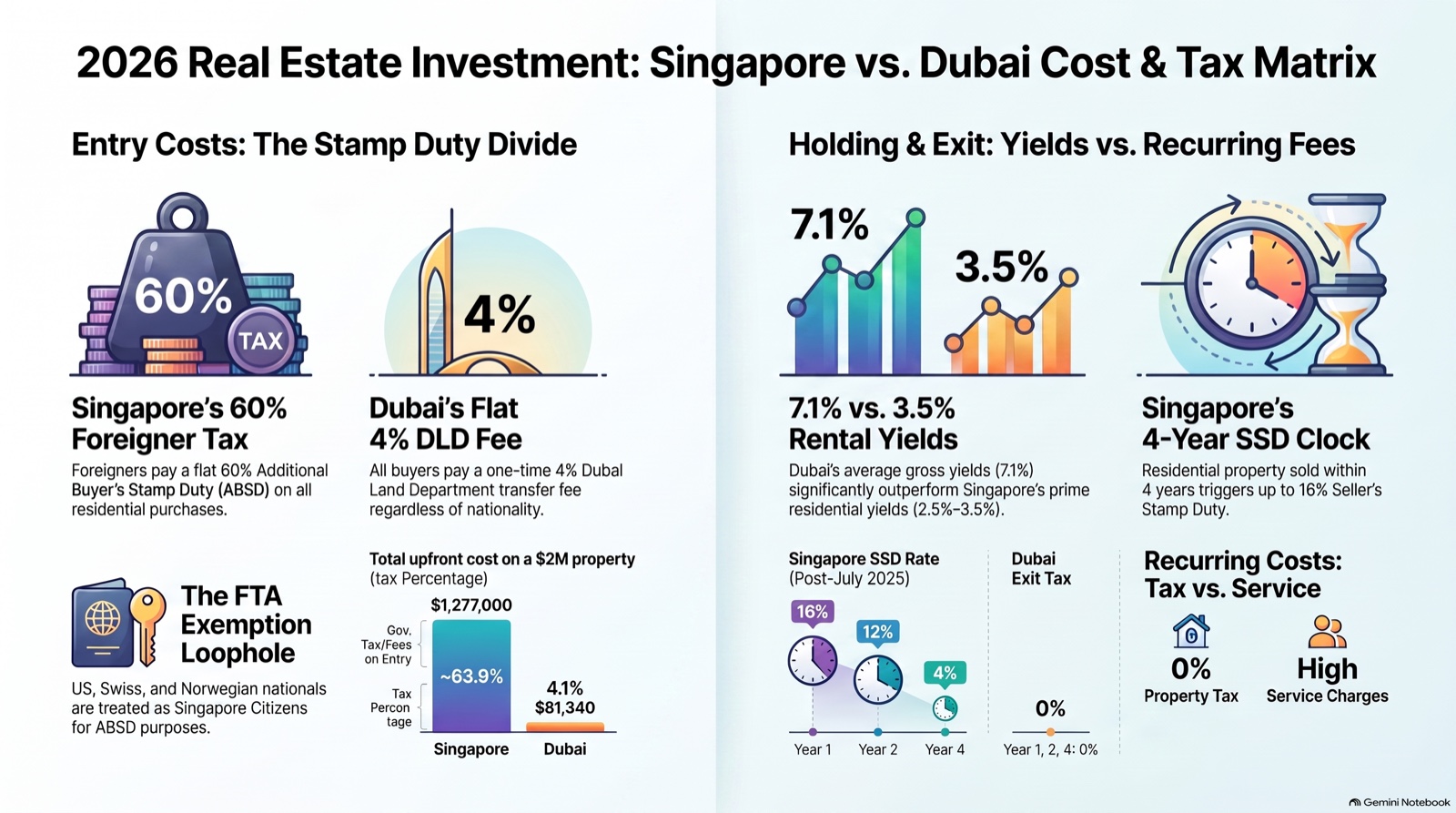
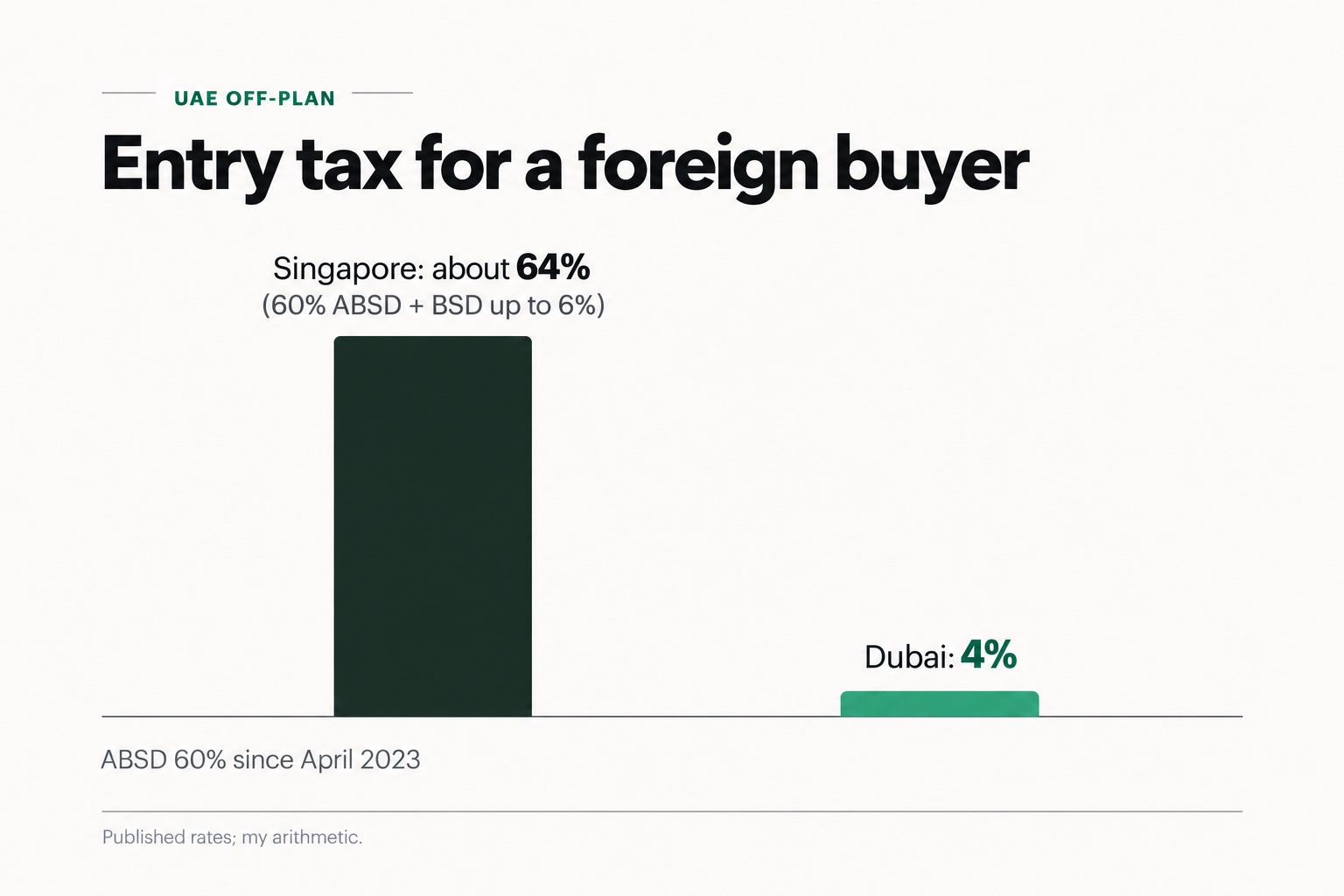
Singapore charges foreigners sixty per cent stamp duty. Dubai charges four. Ten times.
I have said a version of that to buyers. Not in writing, and not often, but across a table, to someone weighing the two cities, as a way of ending the conversation rather than having it. It is a good line. It is short, it is mostly true, and it happens to point in the direction that pays me.
That last part is the problem. I sell Dubai property. When a Dubai broker tells you Dubai is cheaper than somewhere else, you should hear the commission before you hear the number. So this week I sat down to write the comparison properly, expecting to confirm the line with better arithmetic, and it did not quite survive.
Five passports
Singapore has free trade agreements with five countries whose nationals get the same stamp duty treatment as Singapore Citizens: the United States, Switzerland, Norway, Iceland and Liechtenstein. The tax authority lists them on its own page.
A Singapore Citizen pays no Additional Buyer's Stamp Duty on a first home.
So take the research's own figures for a two million dollar purchase and run them for an American buying their first property. About seventy-seven thousand dollars of stamp duty in Singapore. About eighty-one thousand in Dubai.
Not ten times. Roughly the same, and Dubai slightly more.
It only holds for the first property. A second is twenty per cent, a third thirty. But I had never once asked a buyer what passport they held before reaching for the sixty against four. I had been answering a question about the city when the question that mattered was about the person.
Where the cities really do separate
To be fair to the line, the gap is real for most foreigners and it is real for everyone once you look past the purchase.
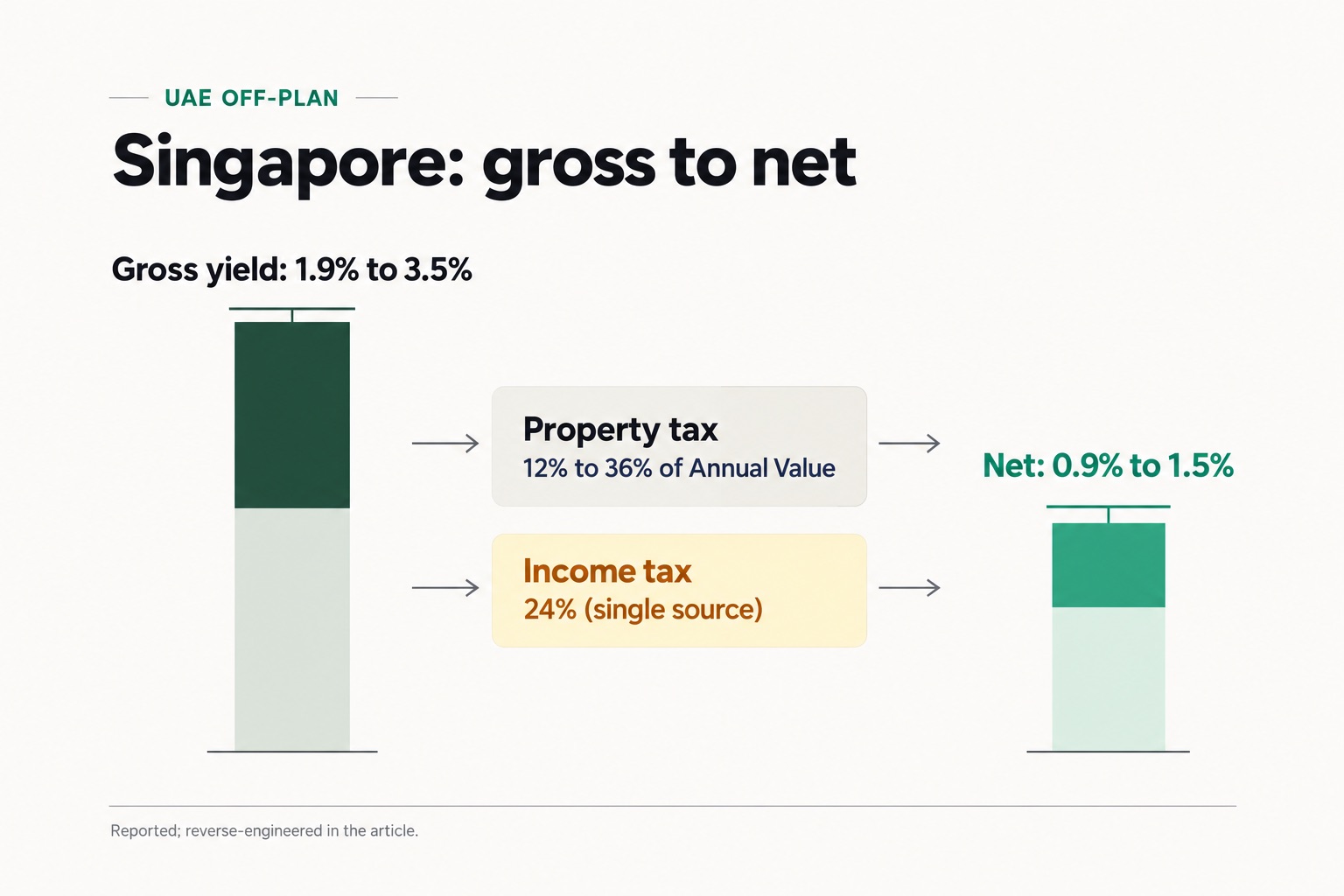
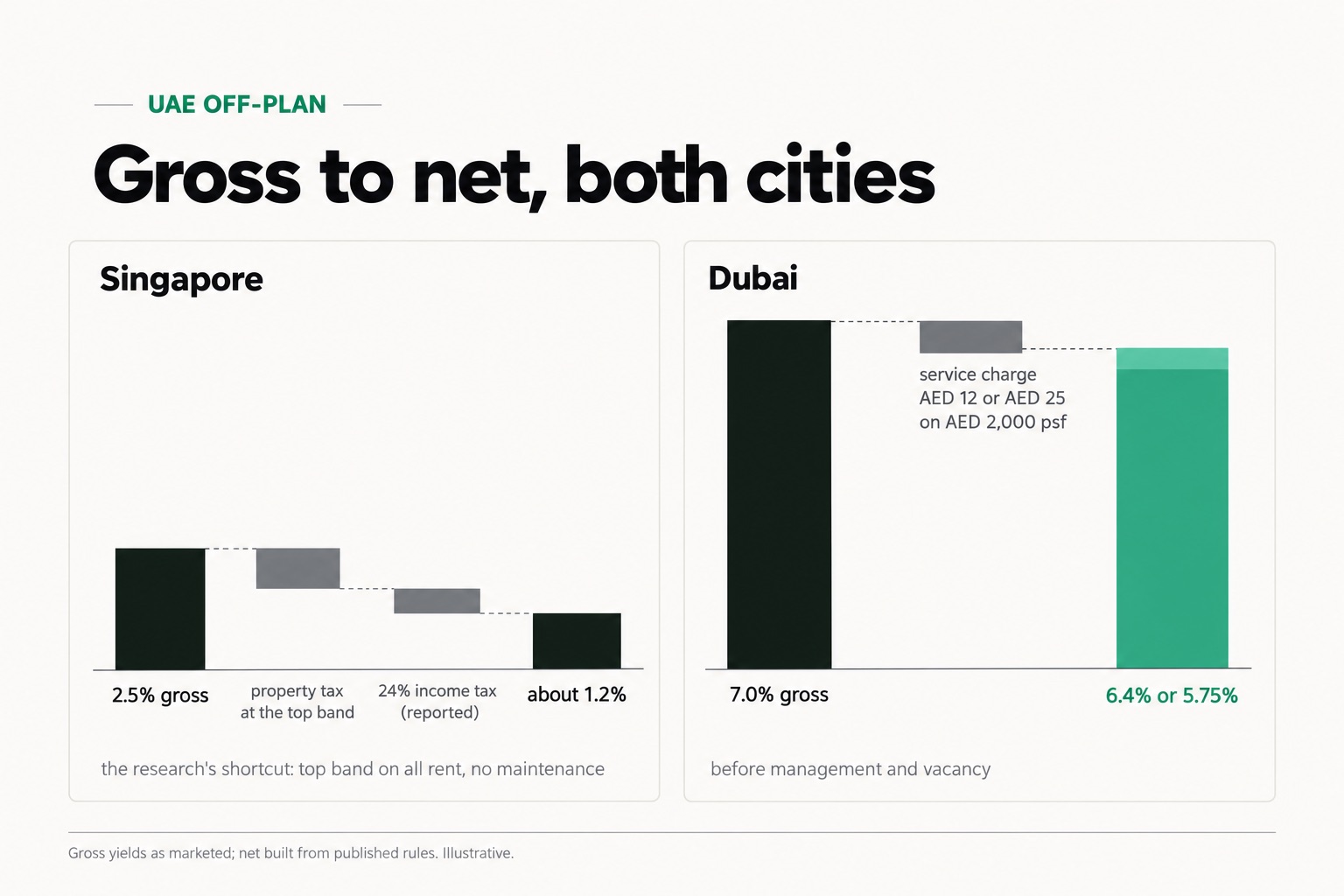
Singapore taxes an investment property's rent twice: an annual property tax on the assessed rent, up to thirty-six per cent at the top of the scale, and then a reported twenty-four per cent income tax on a non-resident's net rent. On prime condos yielding two or three per cent gross, that leaves something around one per cent.
Dubai does not tax the rent for individuals. What it charges instead is a service charge, and this is where I have to be as honest about my own market as I am being about Singapore's.
The research I worked from gave Dubai net yields of five to eight per cent, alongside gross yields of six point seven to seven point three. Read those twice. A net higher than the gross. That is not a yield, it is two brochures stapled together. Every Dubai yield figure in the pack came from someone selling Dubai property, which is to say, from people like me.
Here is the sum that replaces it. Divide the annual service charge per square foot by the price per square foot. That is how many points of yield it takes away. At two thousand dirhams a foot, a twenty dirham service charge takes a full point. A seven per cent gross becomes about six, before management or a single empty month.
Six is still a lot more than one. It is not eight.
The rule that matters most to people like my clients
Most of the people I work with buy off-plan, and a good number of them think about selling before completion. For them the comparison that matters is not the entry tax. It is the exit.
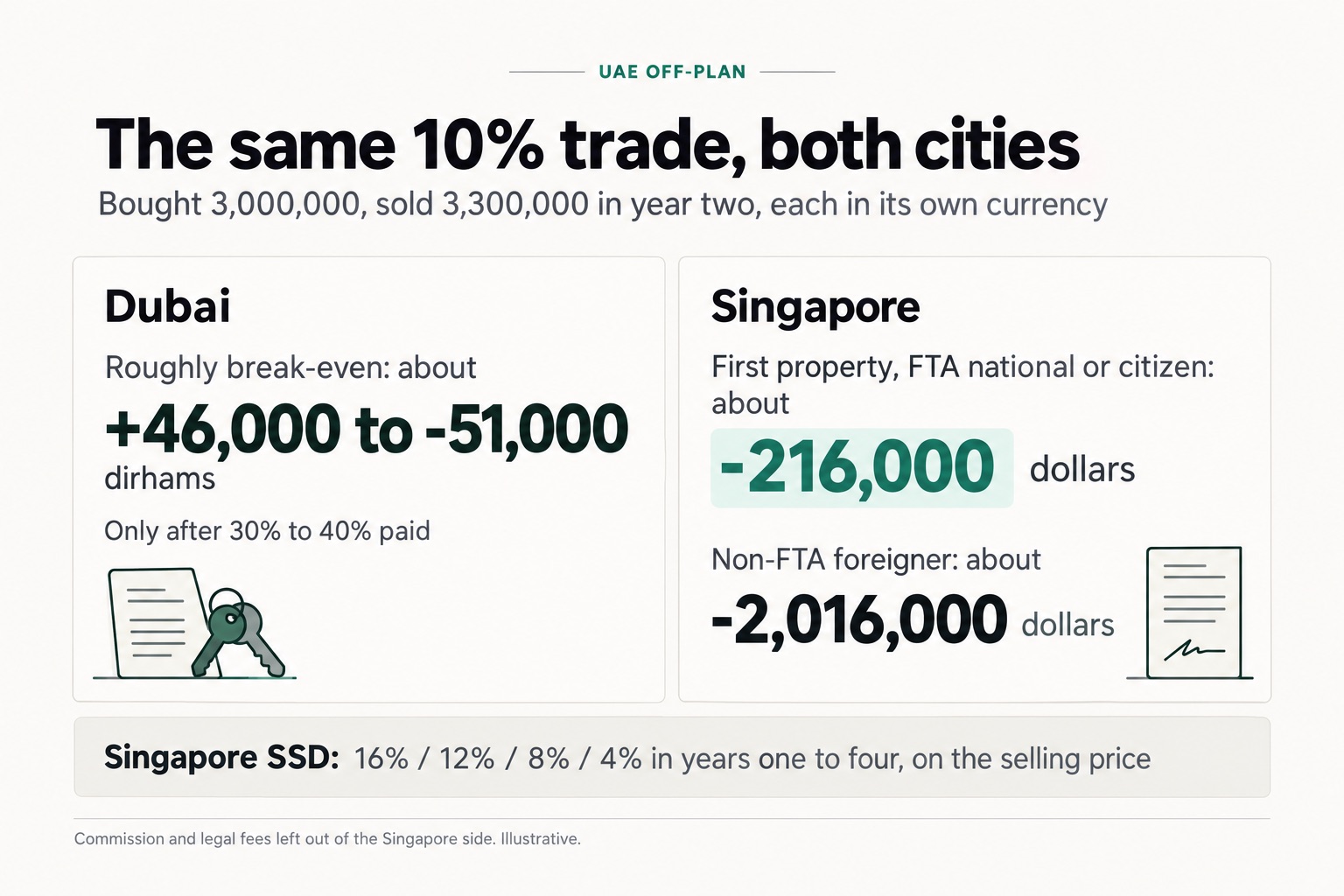
Singapore now charges a Seller's Stamp Duty for four years on homes bought from July 2025: sixteen, twelve, eight and four per cent of the sale price. On the price, not the profit. Which means you need a nineteen per cent rise to cover it in year one and thirteen and a half in year two, before anything else. Buy at three million, sell at three point three in year two, and the duty alone is bigger than the gain.
Dubai has no government exit tax. It has a developer's contract, which usually wants thirty to forty per cent paid before you may assign, and charges a fee when you do. Run the same trade and it comes out roughly flat.
So Singapore punishes a short hold and Dubai prices it. That is a real difference, and it is a better reason to prefer one city than "ten times" ever was, because it depends on what you intend to do rather than on a headline.
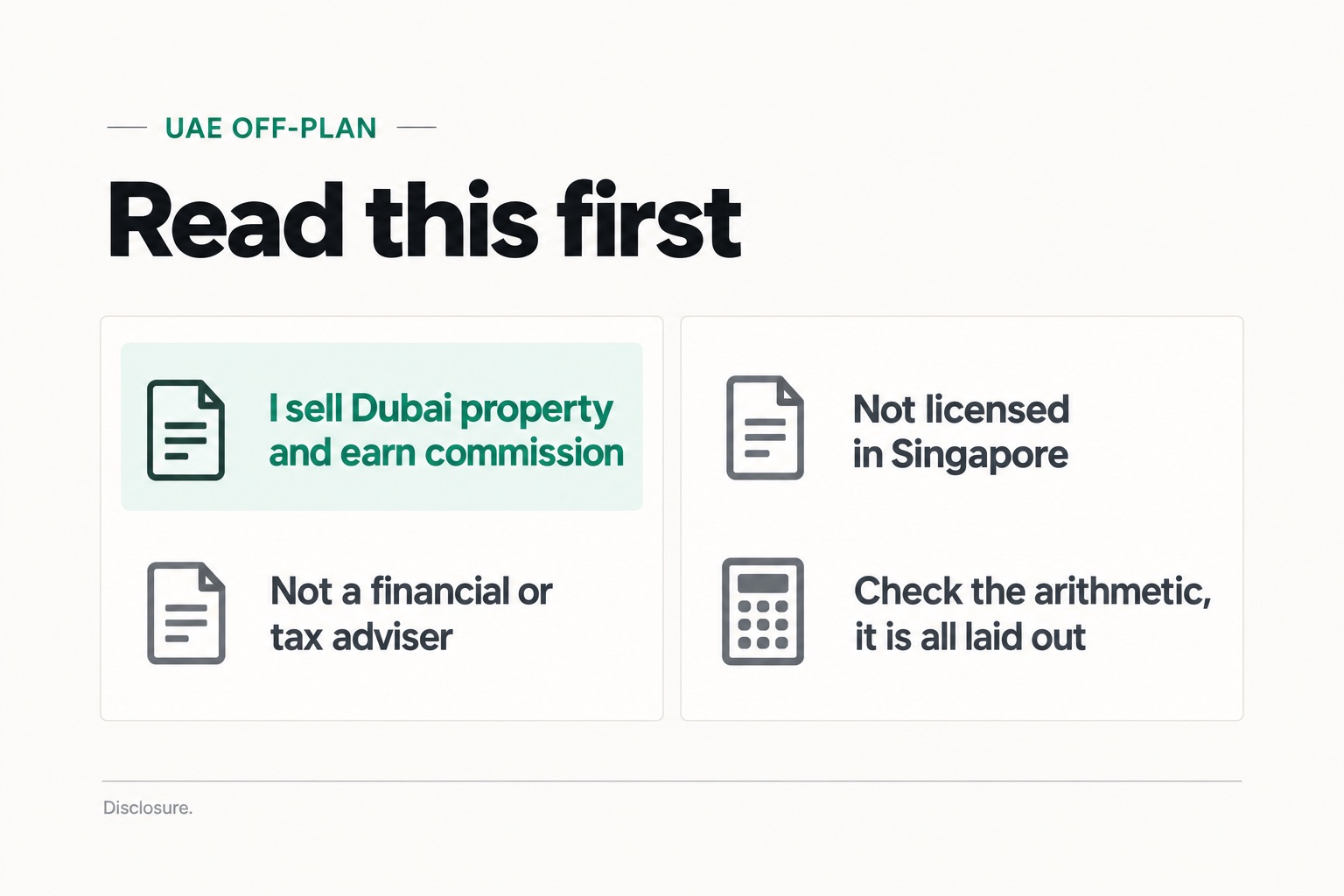
I am a broker, not a tax or financial adviser, and I am not licensed in Singapore. All of this is a comparison of published rules with the sums shown, not a view on where anybody should put their money.
What I take from it
Two things.
The number that flatters you is the one to check first. I did not go looking for the five passports. I found them because I was trying to write something I could defend against my own conflict, and the only way to do that is to go after the result that pays you with more suspicion than the one that does not.
And the right comparison is about the buyer, not the market. Passport, number of homes already owned, and how long you will really hold. Those three decide which city is expensive. The city on its own decides very little.
I will still tell buyers that Dubai is cheaper to enter for most foreigners, because it is. I will ask for the passport first.
Idris Dad writes about off-plan strategy across Dubai, Abu Dhabi and Ras Al Khaimah.
More on how I work with buyers at offplancrypto.com.
Nothing here is financial, tax or investment advice. I am a licensed real estate broker in Dubai who earns commission on Dubai property. I am not a tax adviser and I am not licensed in Singapore.