September 2026
What I used to say
For a long time, when an overseas buyer asked me how to make an off-plan purchase work with a mortgage, I gave a version of the same answer.
Pay the construction instalments on the developer's plan. When the building completes, it becomes a ready property, and ready property gets a higher loan than off-plan. Refinance then, settle the last milestone with the bank's money, and some of what you put in comes back.
I wrote that sequence up properly last week, with the caveats: it depends on the valuation, handover slips, and it is a description of what the rules allow rather than a plan for anyone.
What I did not do, in all the times I said it out loud, was run it for the person actually sitting across from me. Which, more often than not, was someone who does not live here.

What the number actually is
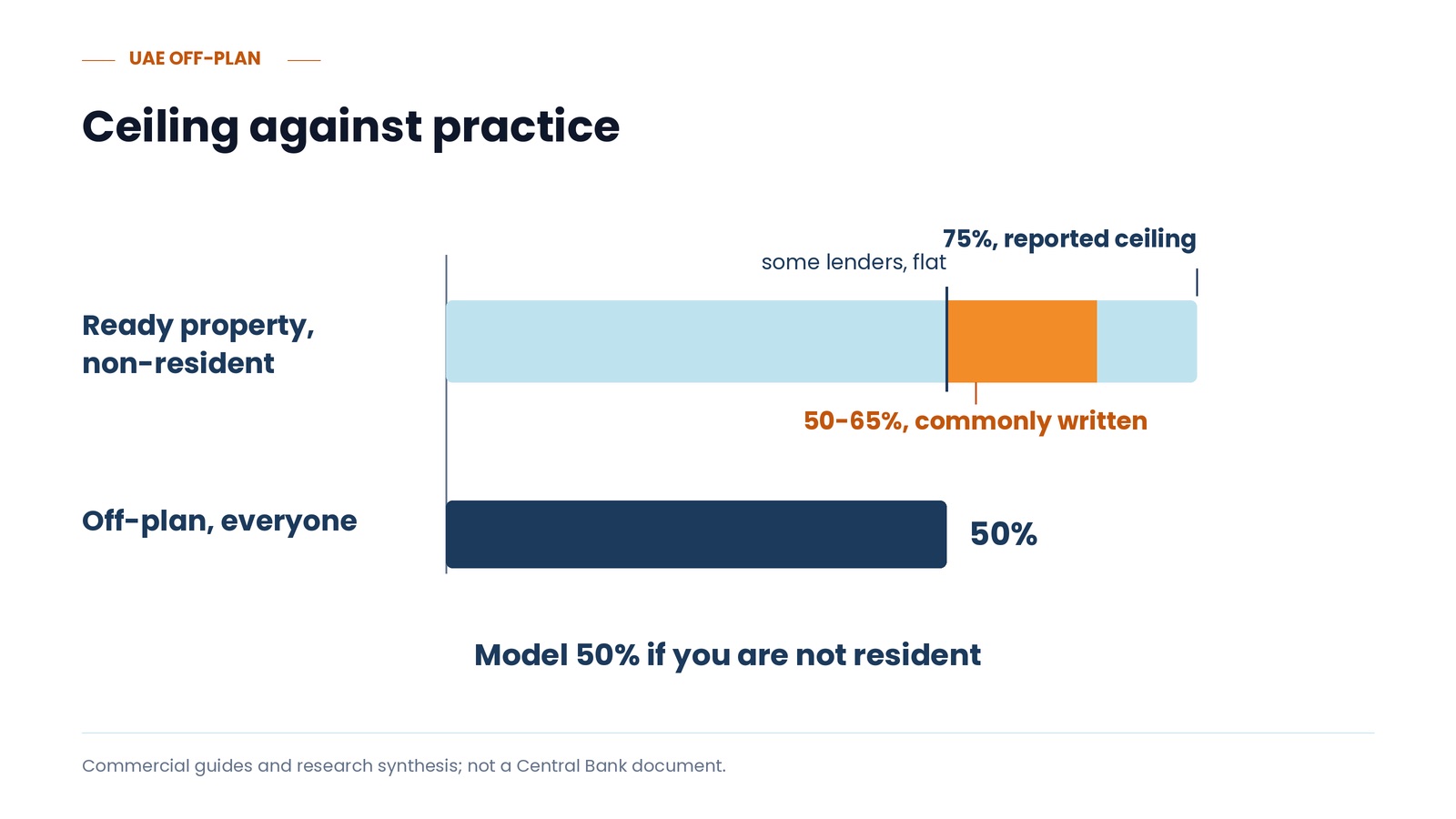
Off-plan lending in the UAE is capped at fifty per cent for everyone. That part I had right.
The step-up at handover is the difference between that fifty per cent and whatever the bank will lend on the finished unit. For a UAE national or a resident on a first home, that gap is wide and the refinance can release real money.
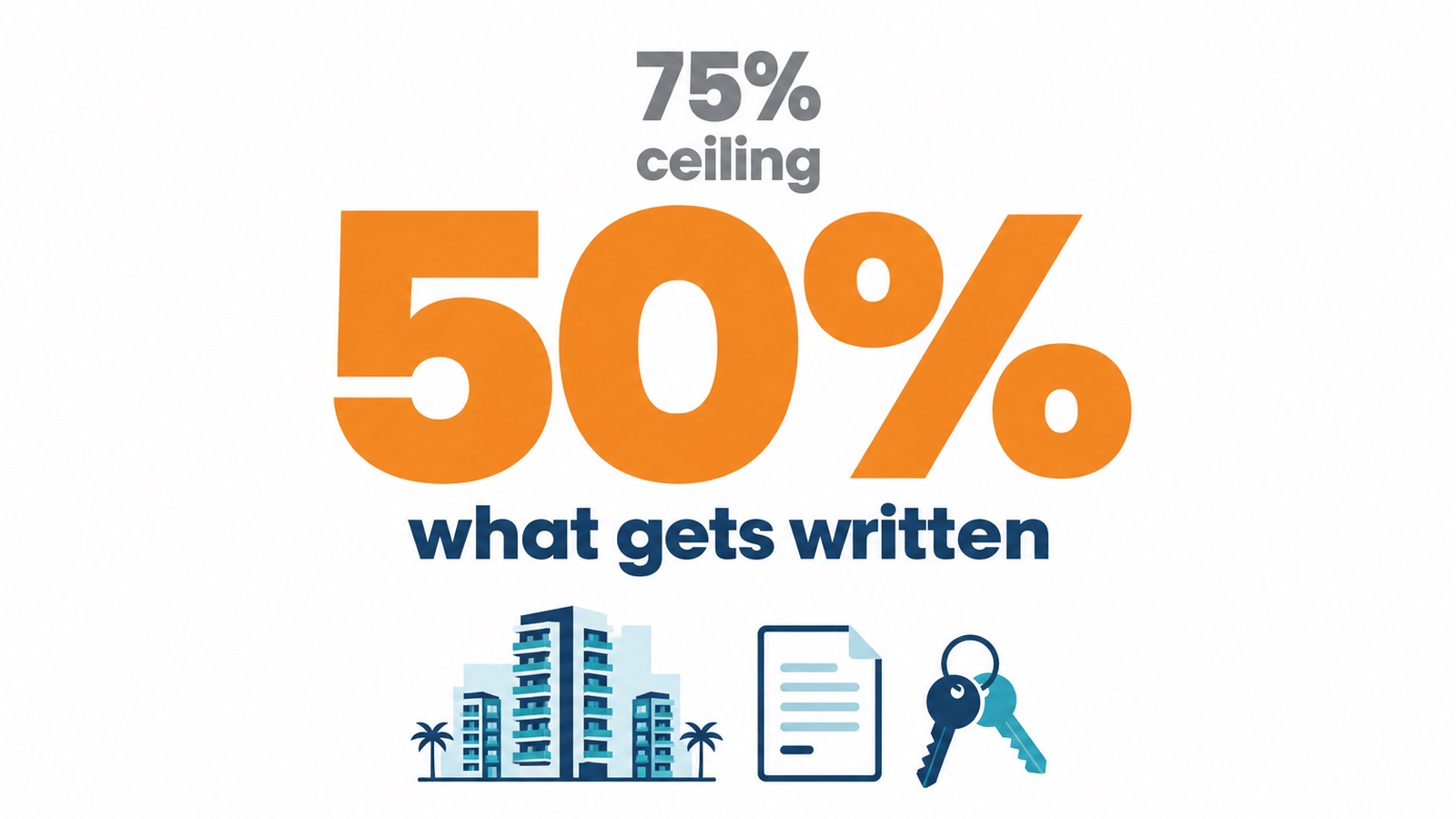
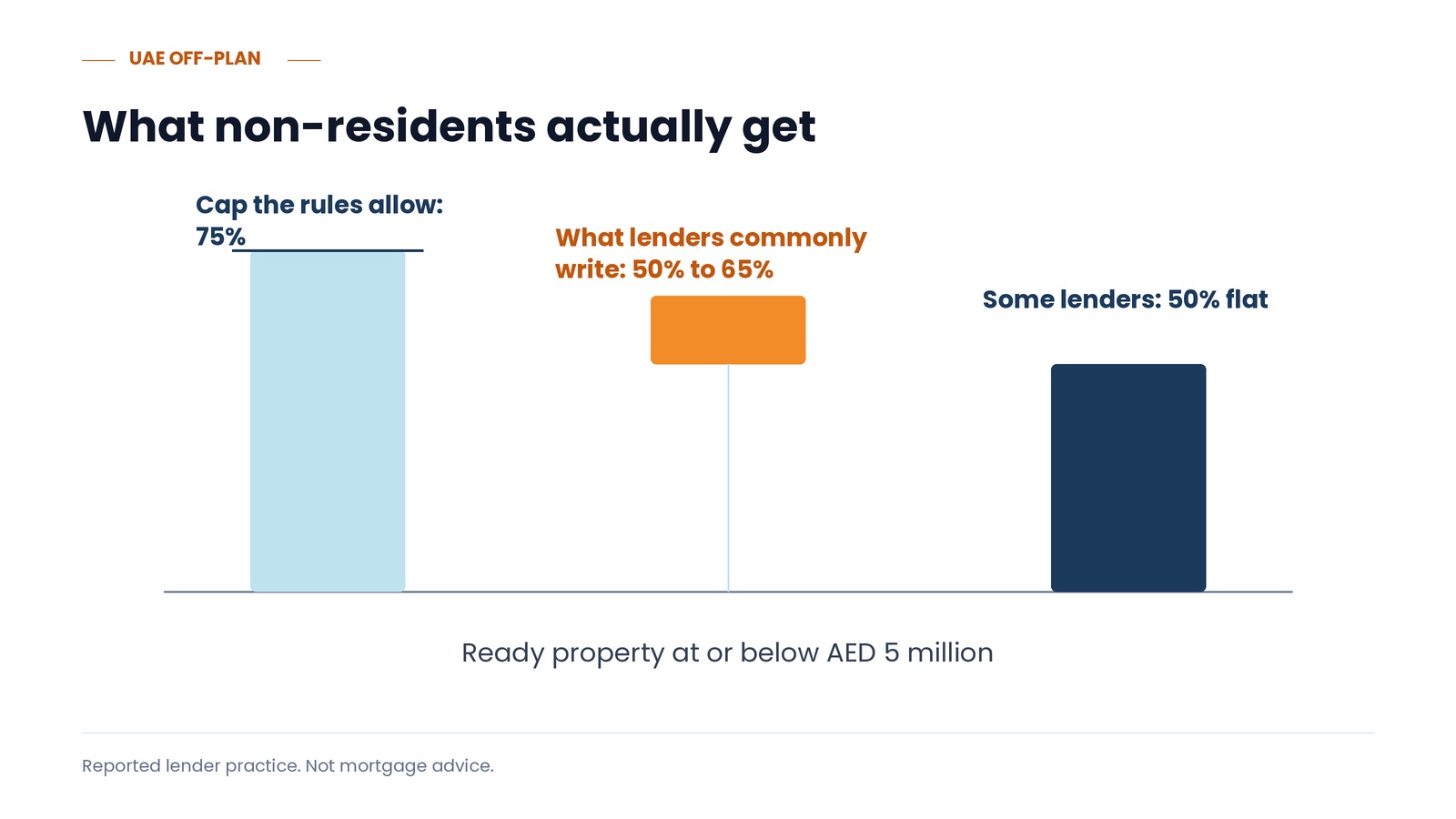
For a non-resident, the headline ready figure is seventy-five per cent. What lenders are reported to commonly write is fifty to sixty-five. Some write fifty flat, for every non-resident, whatever the property.
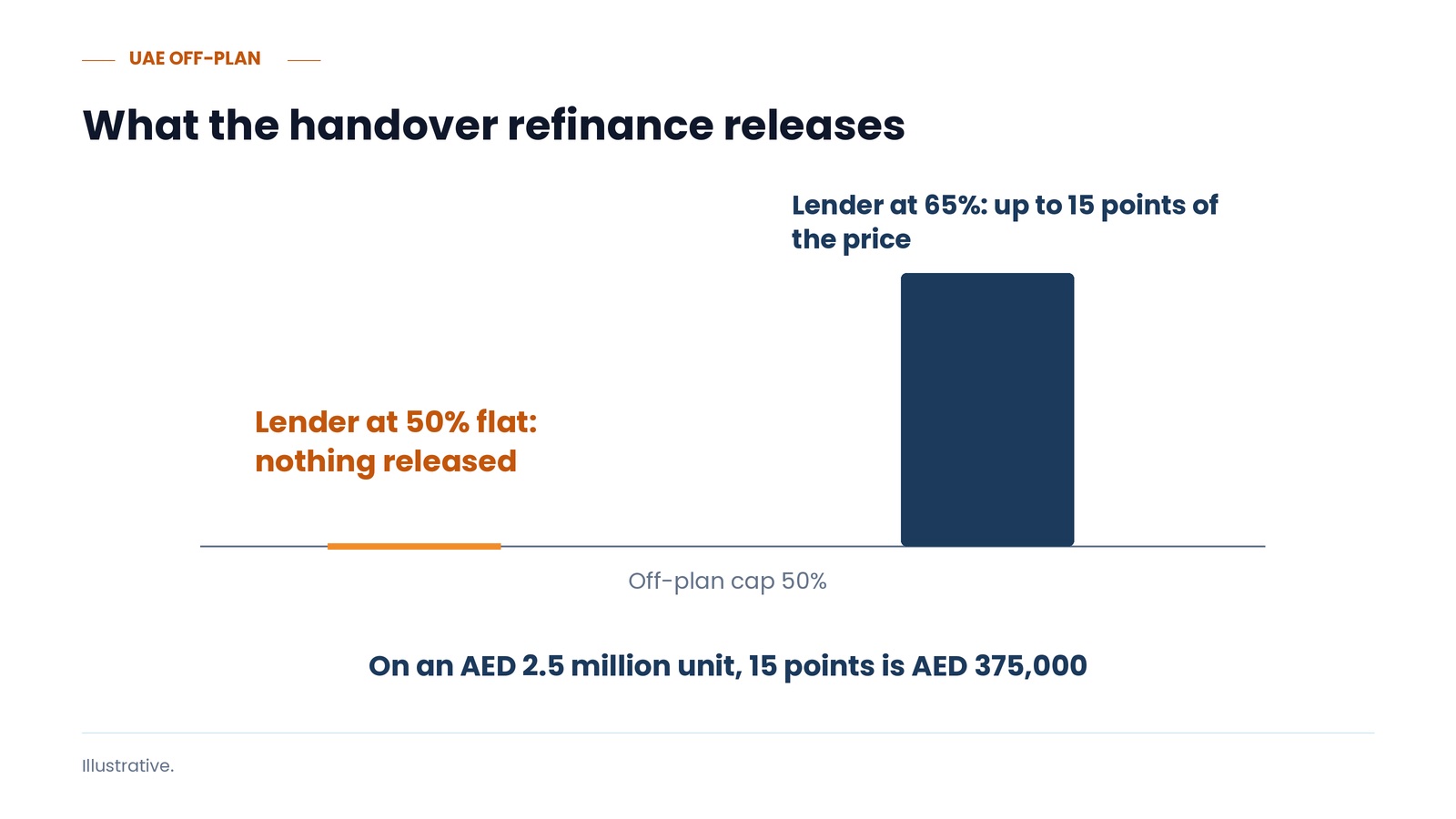
So the step-up for an overseas buyer is somewhere between zero and fifteen points of the price. On a two and a half million dirham unit, between nothing and three hundred and seventy-five thousand, before the valuation has had its say.
At a lender writing fifty flat, the refinance I used to describe releases exactly nothing. The buyer has paid for most of the building themselves, as they were always going to, and at handover they are offered the same fifty per cent they could have had on day one.

Why I missed it
Not because the information was hidden. Because I had filed it in the wrong drawer.
When I first saw the non-resident figure quoted as sixty-five in one place and seventy-five in another, I treated it as a sourcing problem. Somebody was wrong, I did not know who, so I published the range and moved on.
Reading the next set of research, the disagreement mostly dissolved. Seventy-five is the ceiling the rules are reported to allow. Fifty to sixty-five is what a credit committee is reported to actually sign. Both numbers are true. They answer different questions.
I had been treating a conflict between two layers as a conflict between two sources. And because I had not asked which layer the higher number lived in, I had been quietly assuming the higher number when I described the handover move. The move sounds much better at seventy-five.
I should say plainly that this explanation is still not settled. None of the material I worked from is a Central Bank document. It is the likeliest reading of what I have, and I will change it if a regulator's text says otherwise.
The rest of it is about foreign paperwork
The other thing that changes when you live abroad is that eligibility stops being about the property and becomes about you.
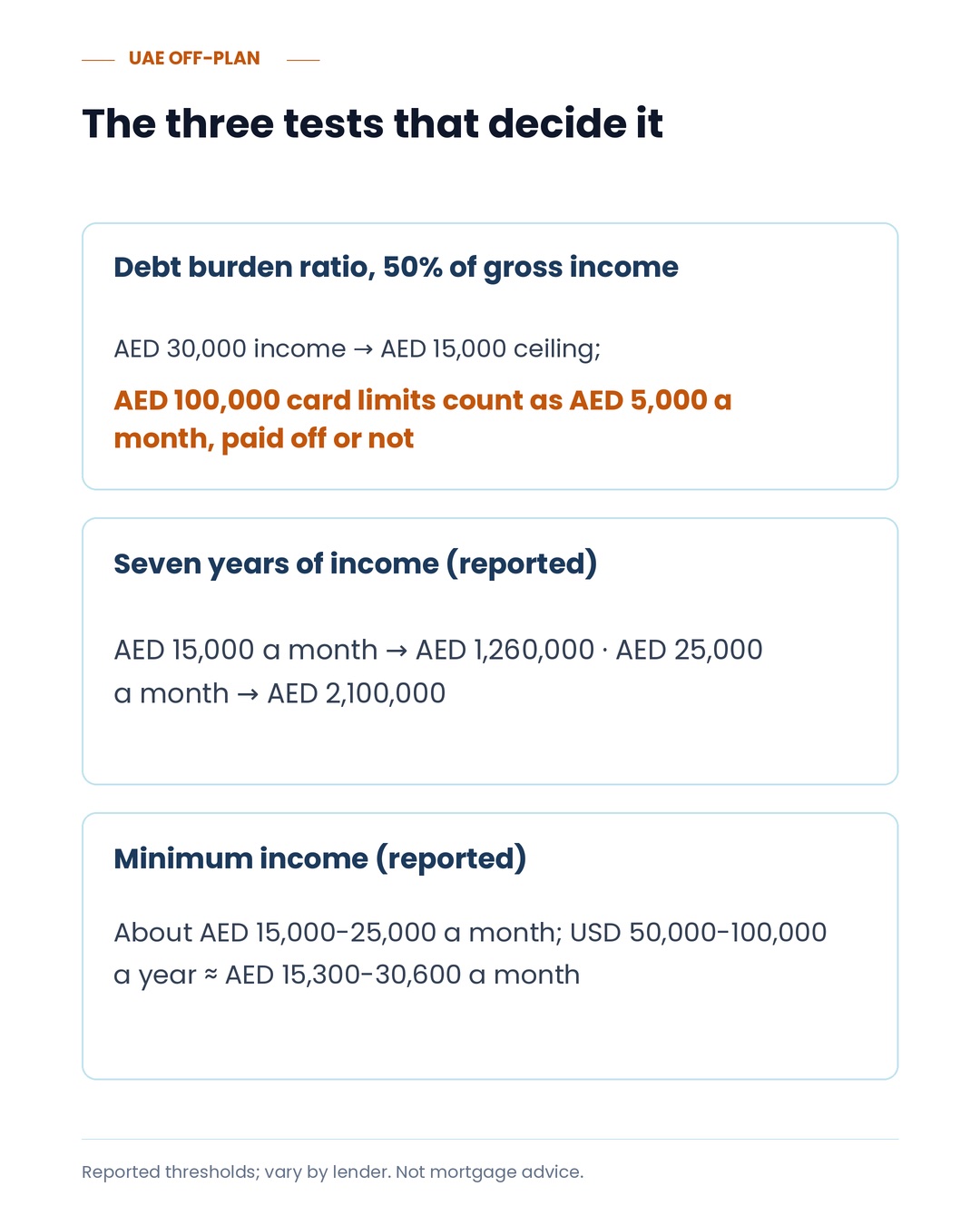
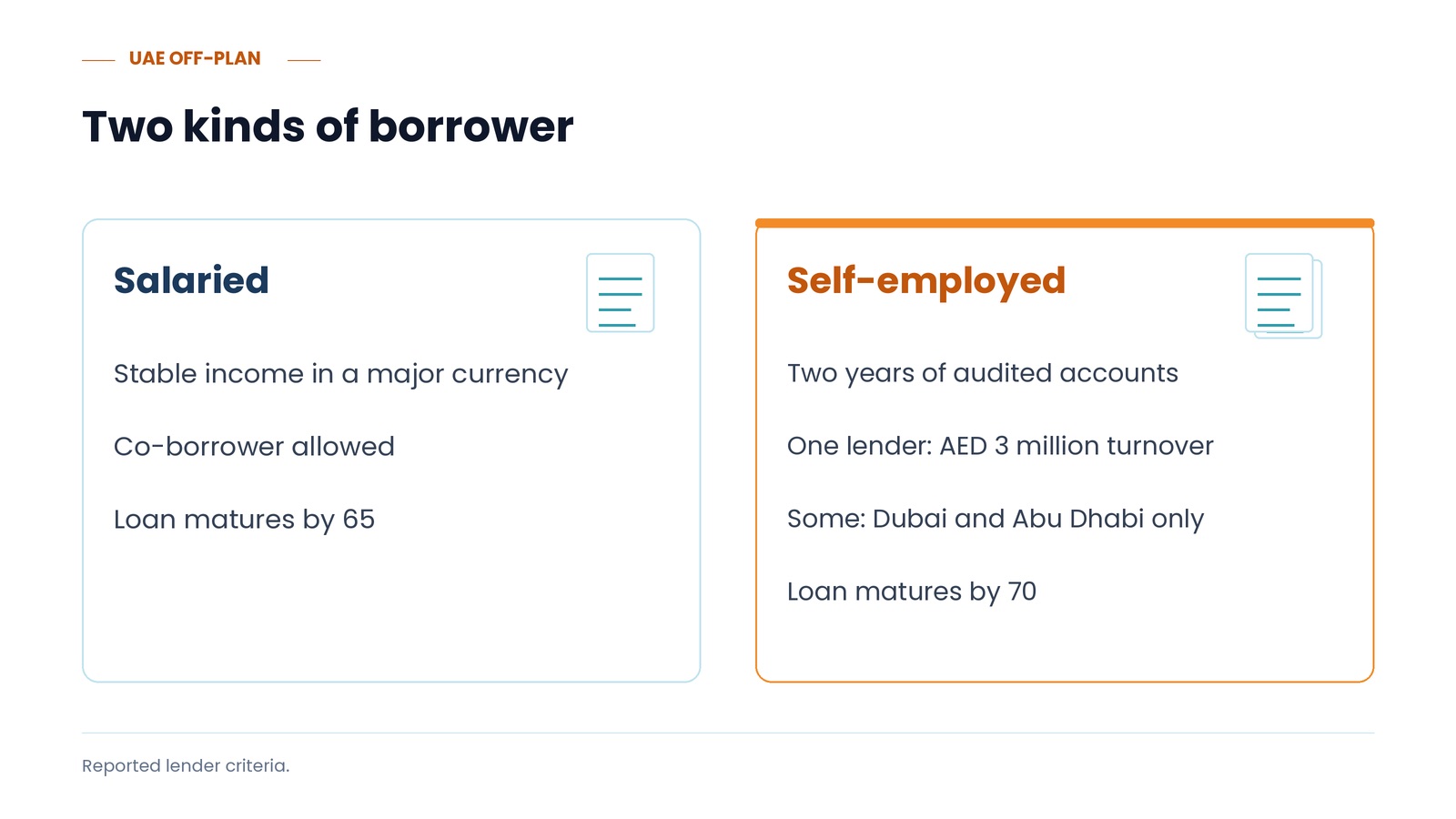
The bank runs a debt burden test on your global position: the mortgage on your home, the car, the personal loan, and reportedly five per cent of your total credit card limits every month, used or not. It runs an income ceiling, reportedly seven years of verified earnings. It wants two years of audited accounts if you are self-employed, and some lenders will only lend to self-employed non-residents in Dubai and Abu Dhabi.
None of that is exotic. All of it is the kind of thing an overseas buyer finds out after they have fallen for a unit, which is the wrong order.
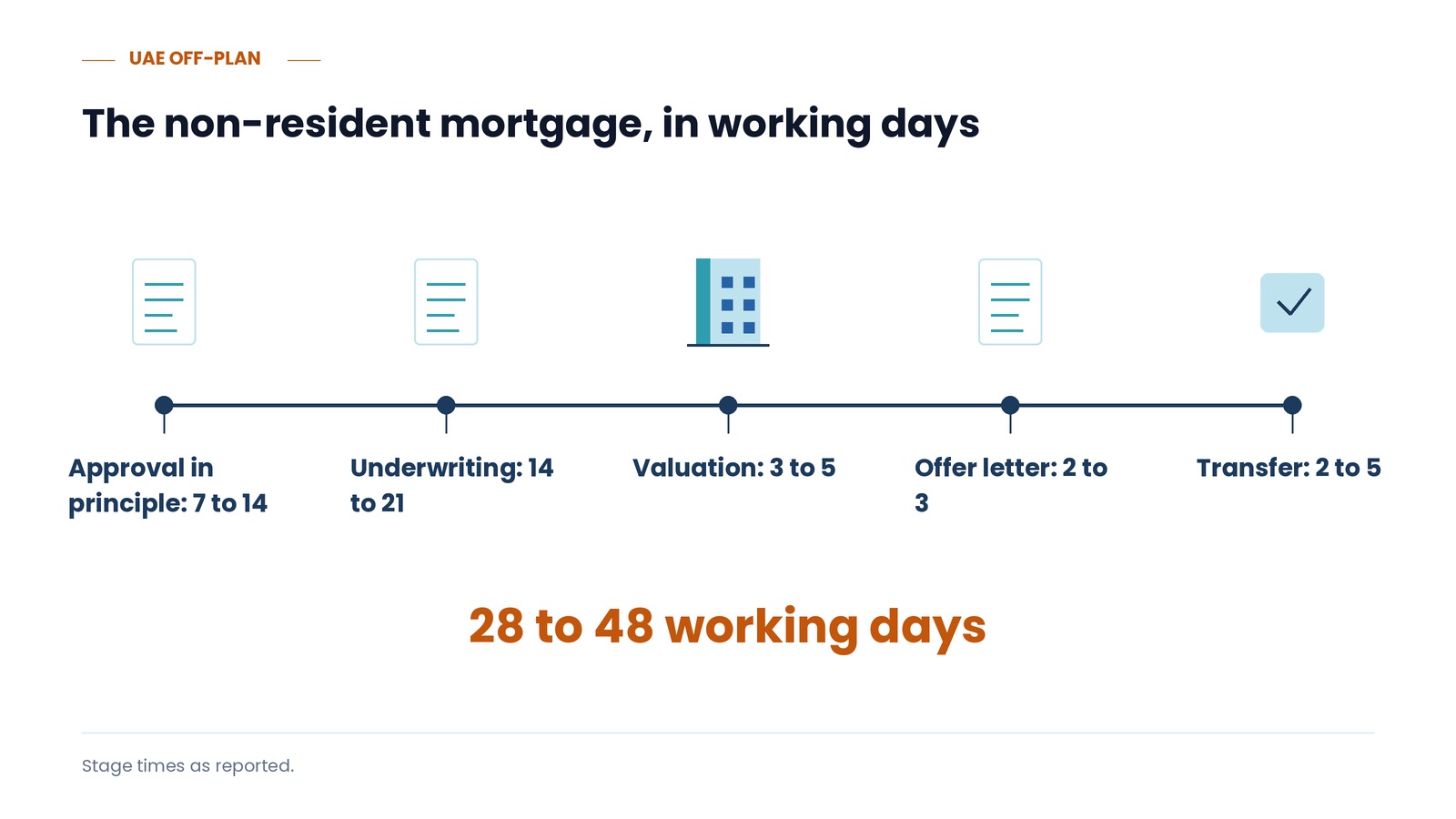
And the process is longer than it is sold as. The usual line is four to six weeks. The stage durations quoted alongside it add up to six to ten.

What I have changed
I am a broker, not a mortgage adviser, so I do not tell anyone which loan to take. What I can do is stop describing a move without its numbers.
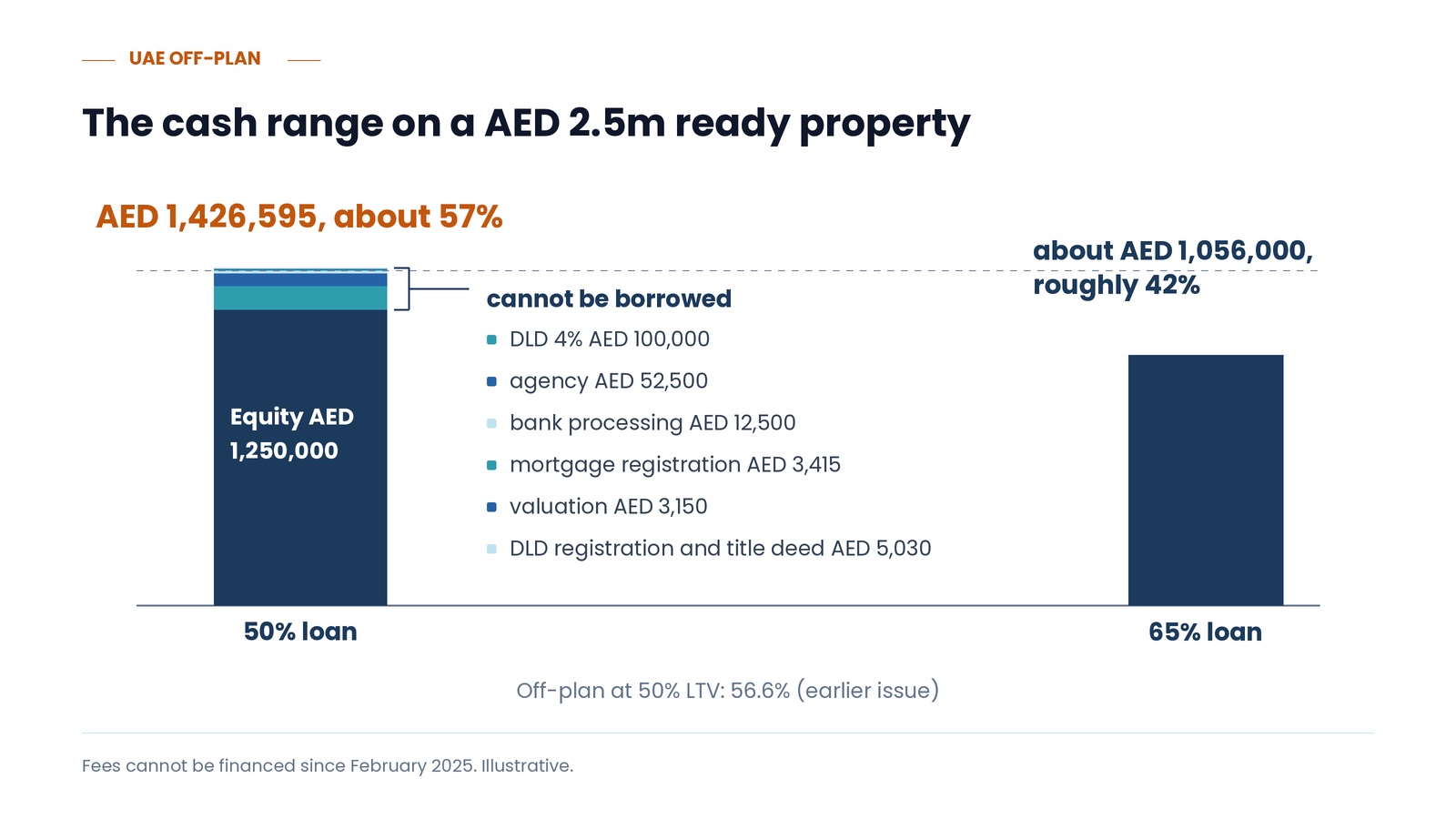
So now, with an overseas buyer, the handover refinance does not get mentioned until we have written down three things: what they would pay at fifty per cent, what they would get back at sixty-five if everything goes right, and what they get back at fifty flat, which is nothing. If the deal only works at the top of that range, it does not work.
And the fifty-seven per cent figure from the fees, which I keep writing about, applies here too. At fifty per cent LTV, the cash needed is about fifty-seven per cent of the price. Two separate sets of research landed on it, and I have checked the arithmetic in both. That is the one number I would put in front of every overseas buyer before they look at anything.
What I take from it
A range is not always a disagreement. Sometimes two numbers are both right and describe different things: what is permitted and what is done. Asking "which of these is wrong" can stop you asking "what is each of these measuring", and the second question is usually the useful one.
And run the move for the person in front of you. A strategy described in general is a story. The same strategy with the buyer's own numbers in it is either a plan or a warning, and you do not find out which until you do the arithmetic.
Idris Dad writes about off-plan strategy across Dubai, Abu Dhabi and Ras Al Khaimah.
More on how I work with buyers at offplancrypto.com.
Nothing here is mortgage or financial advice. I am a licensed real estate broker, not a mortgage adviser, and no bank or product is named.