September 2026

The question I get most
"Should I be in more than one emirate?"
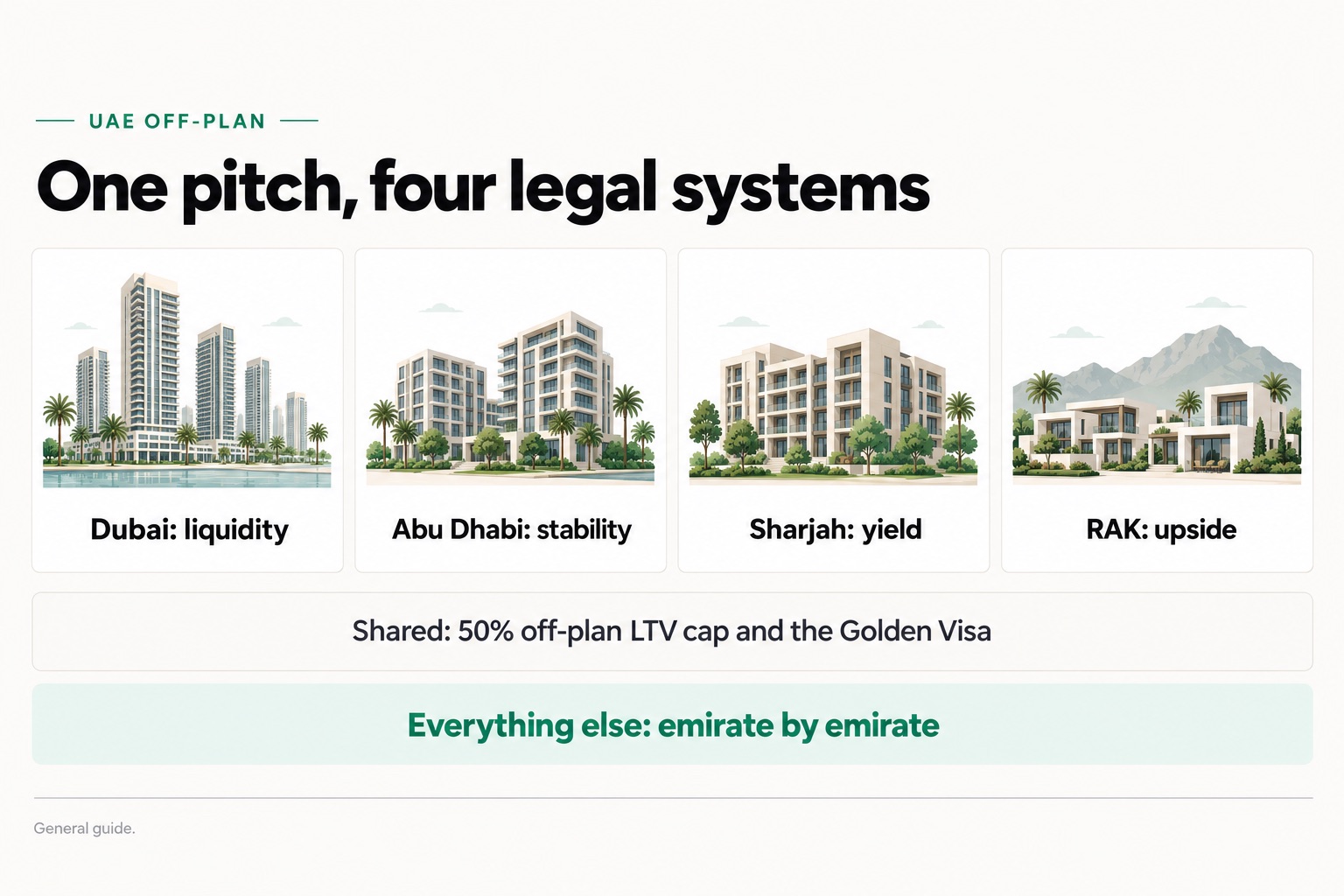
I get asked it more than anything else now, usually by somebody who already owns in Dubai and has been sent a slide showing four coloured blocks: Dubai for liquidity, Abu Dhabi for stability, Sharjah for yield, RAK for upside.
For a long time my answer was some version of yes. It sounded prudent. It is the sort of thing a sensible person says. And I am going to admit something about how I used to say it.
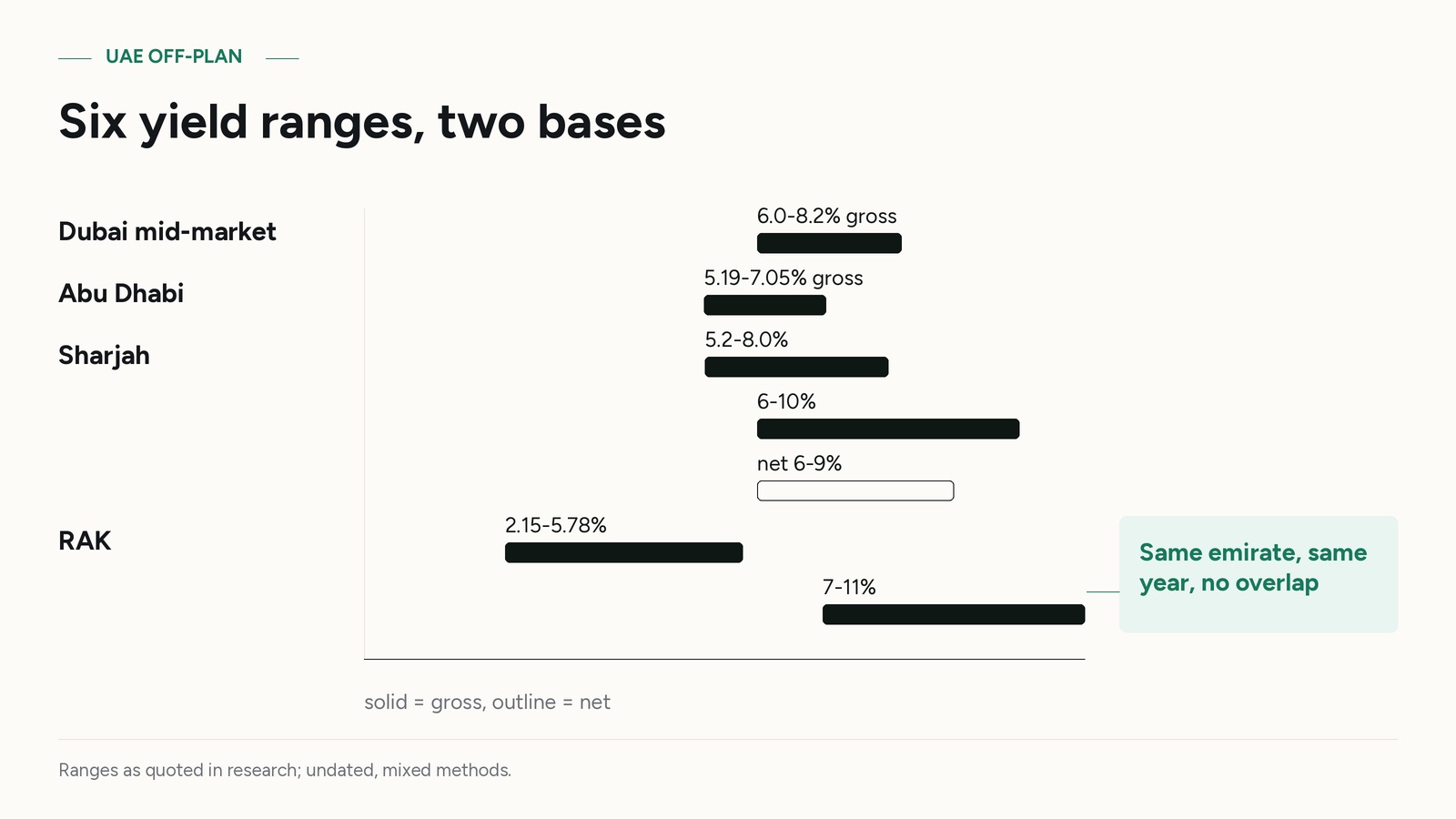
I used to compare yields across emirates using whatever range each source gave me. Dubai at seven-something, Sharjah at eight-something, Abu Dhabi a bit lower, RAK whatever the latest guide said. I put them side by side and talked about "the yield differential" as if the numbers had been measured the same way.
They had not. I never checked. Some were gross, some were net, none were dated, and I had no idea what method sat behind any of them. I was comparing four numbers that were not the same kind of number.

What the numbers actually look like
This week I went through a research set built specifically around the four-emirate case. Thirty-three sources. And the first thing I noticed was that the research tool had mostly cited itself. Of sixty-one citations in the piece it produced, fifty-one pointed at a summary it had written. That is the problem with this whole category in miniature: a confident structure built on a summary of a summary.
Then the yields. For RAK, one layer of the research said 2.15% to 5.78%. Another said 7% to 11%. Same emirate, same year, and the two ranges do not even touch.
For Sharjah there were three ranges. Two gross, one net, all different.
I have quoted numbers like these to clients. Not those exact ones, but numbers from the same kind of source, placed side by side in the same careless way. I am not proud of it.
The only yield I trust now is the one I calculate: rent from a registered tenancy, divided by what you would actually pay, dated, then again after service charges. Everything else is a mood.
The test that changed my answer
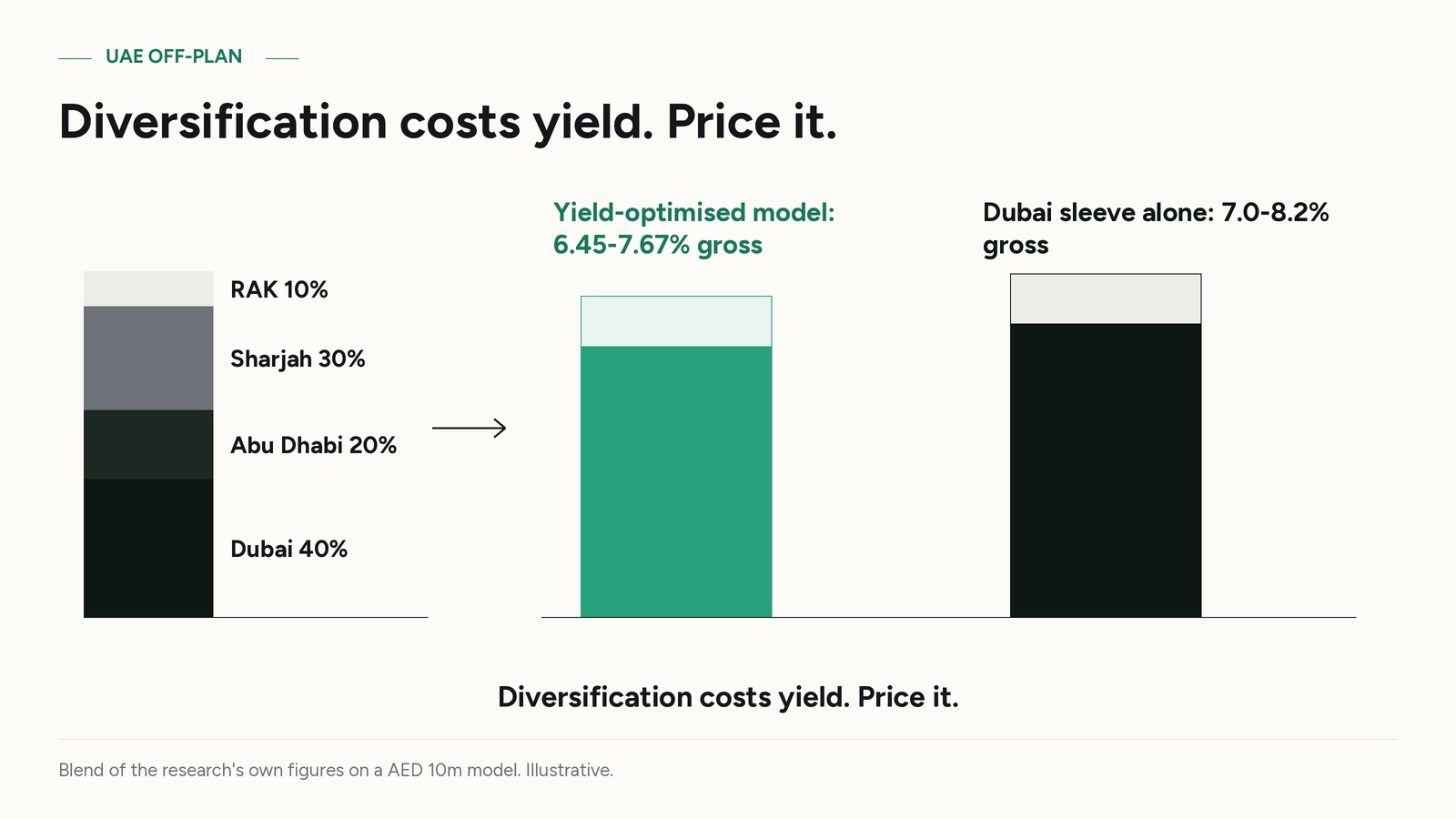
The research proposed a model: AED 10 million split 40% Dubai, 20% Abu Dhabi, 30% Sharjah, 10% RAK. It called it "yield-optimised".
So I weighted its own yield figures. Low end, 6.45% gross. High end, 7.67%.
And the same research gave its Dubai sleeve on its own 7.0% to 8.2%.
The yield-optimised portfolio yields less than its best piece. Swap in the more generous RAK figure and it comes out about level. Either way, spreading did not raise the yield. It lowered it slightly.
The first time I ran that I thought I had made an arithmetic mistake. I had not. It is just what diversification does, and I had never said it out loud to a client.

Insurance, not yield
Here is what I think now.
Spreading across emirates is insurance. You pay a premium, in yield and sometimes in registration fees, to avoid having every dirham tied to one emirate's supply cycle, one regulator and one rental market. That is a perfectly good thing to buy. People buy insurance all the time and they are right to.
But nobody buys insurance because it pays better than not having insurance. And that is how the four-emirate case gets sold: as more yield, more upside, more everything. The honest version is less concentration, at a price.
Once you frame it that way the conversation changes. The question is no longer "should I be in four emirates?" It is "how much yield am I willing to pay to be less exposed to Dubai, and is that price worth it to me?" That is a question the buyer can answer and I cannot, and it is a much better question.
The things that do not diversify
A few things came out of the research that I now say every time.
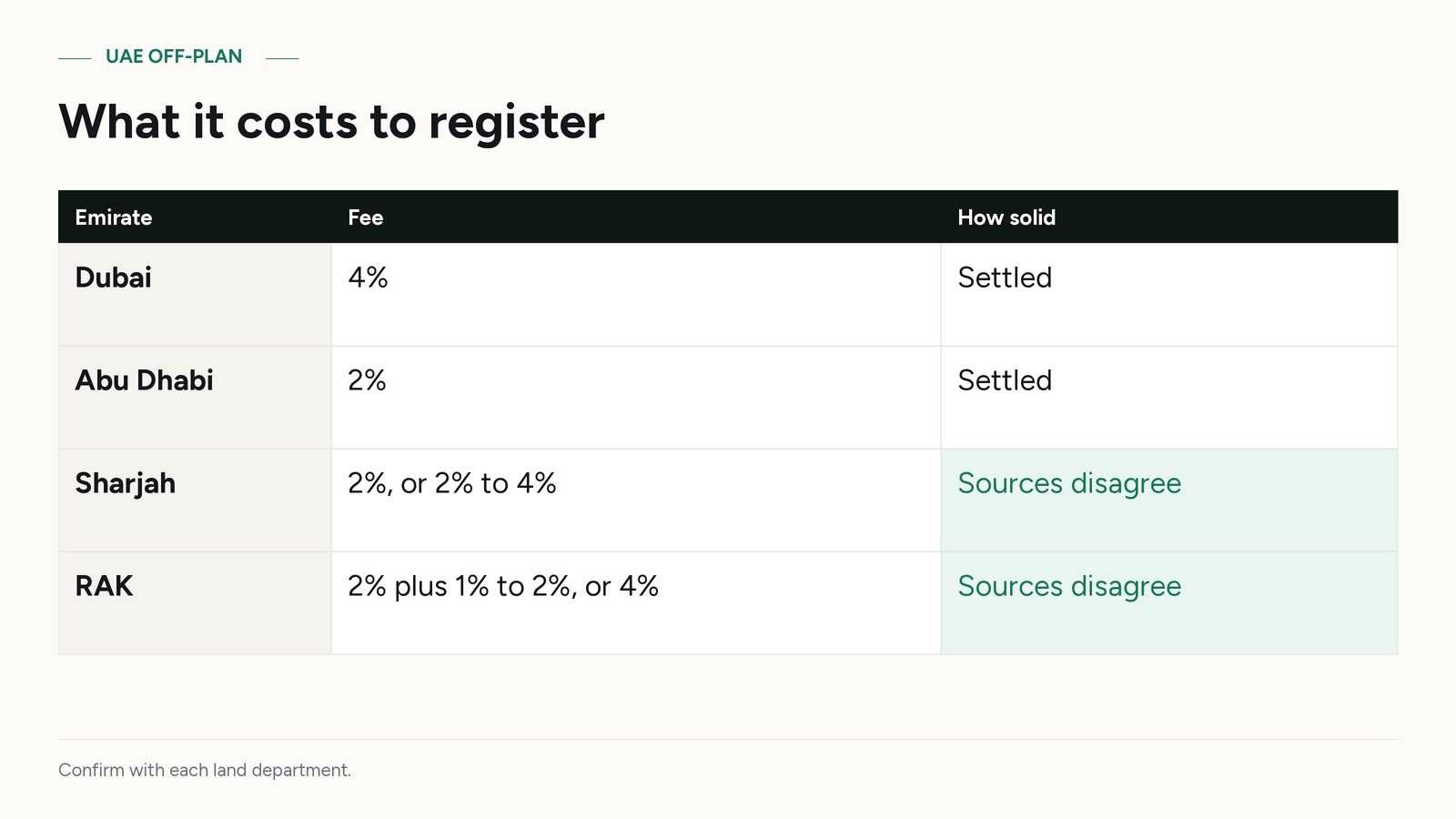
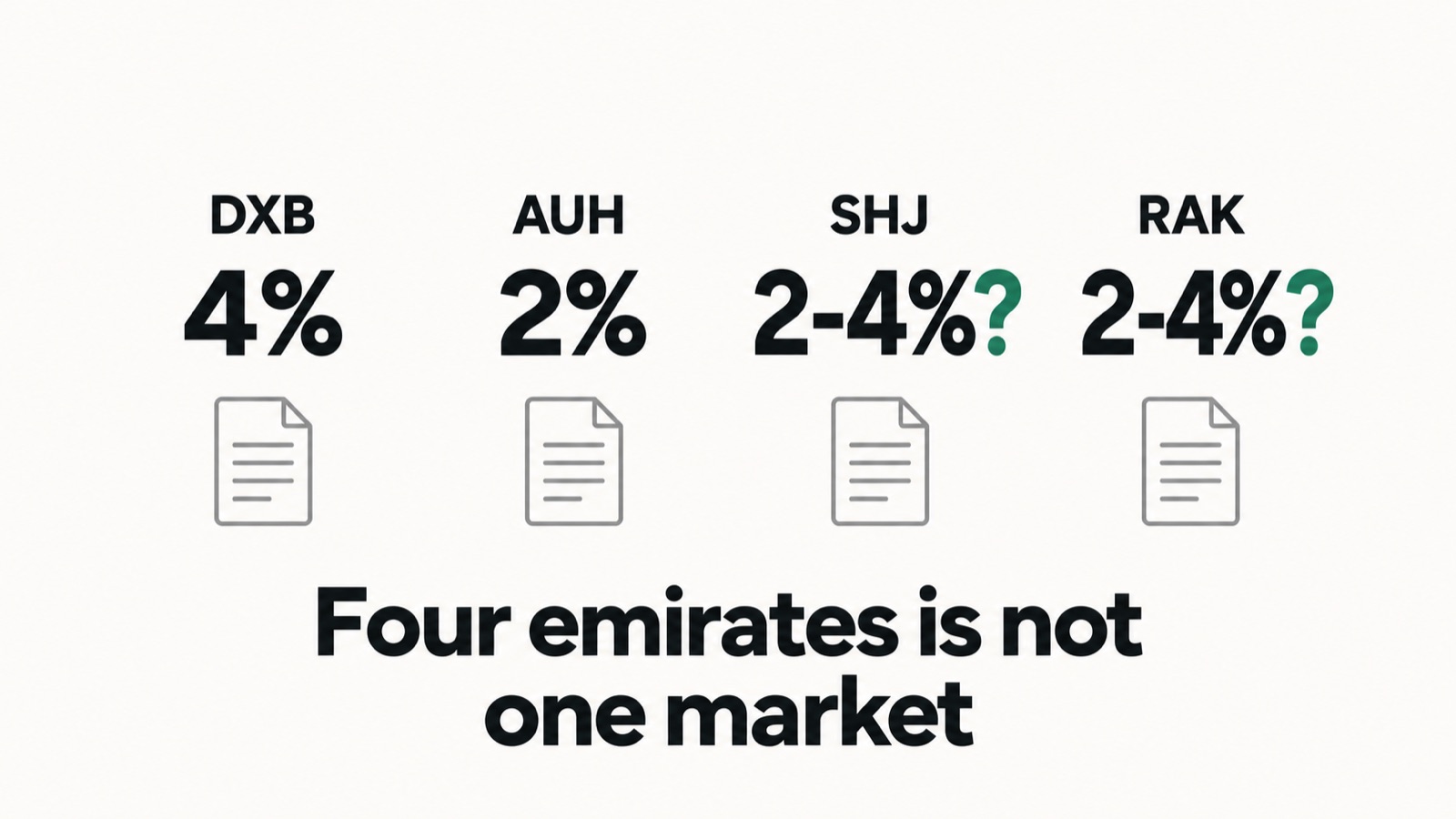
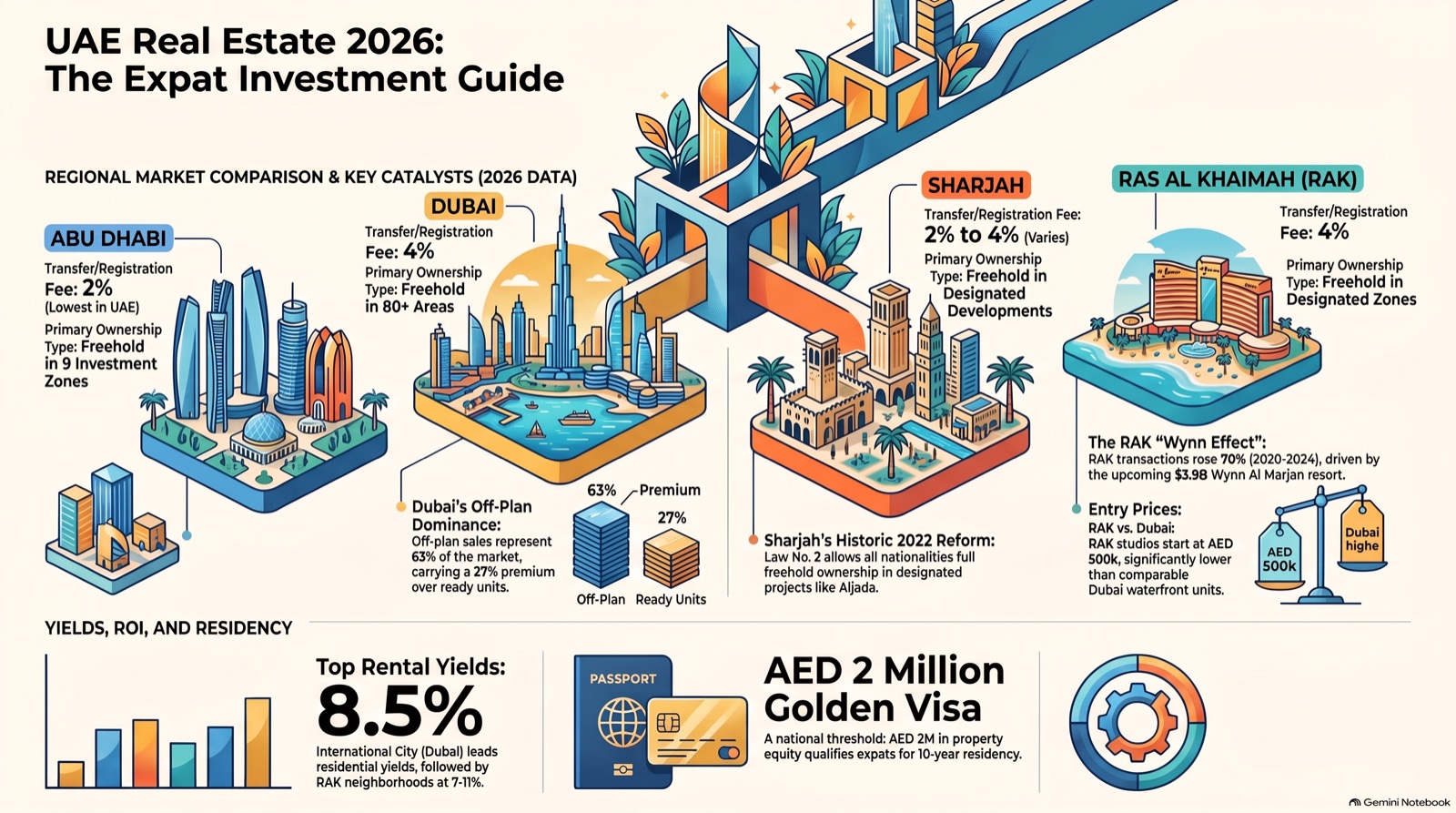
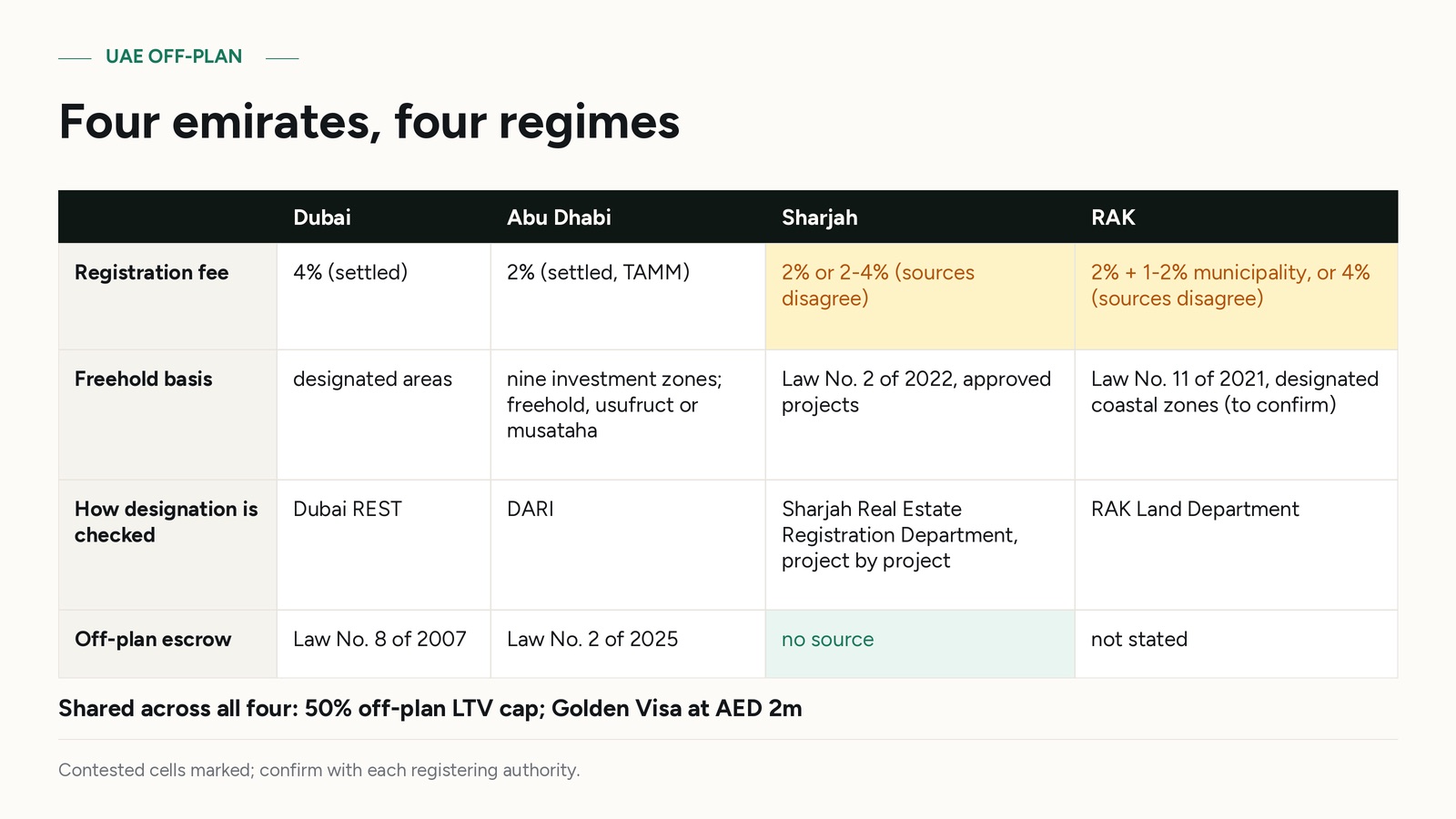
The registration fee is not one number. Dubai is four per cent. Abu Dhabi is two. Sharjah and RAK, my sources disagree, somewhere between two and four in both. If two of your four entry costs are unknown, you do not have a model yet.
Ownership is not one right. Sharjah opened freehold to all nationalities in 2022, but there is no public list of which projects qualify. You check project by project with the registration department. And marketing in Sharjah and RAK mixes up freehold and usufruct often enough that the research warns about it specifically.
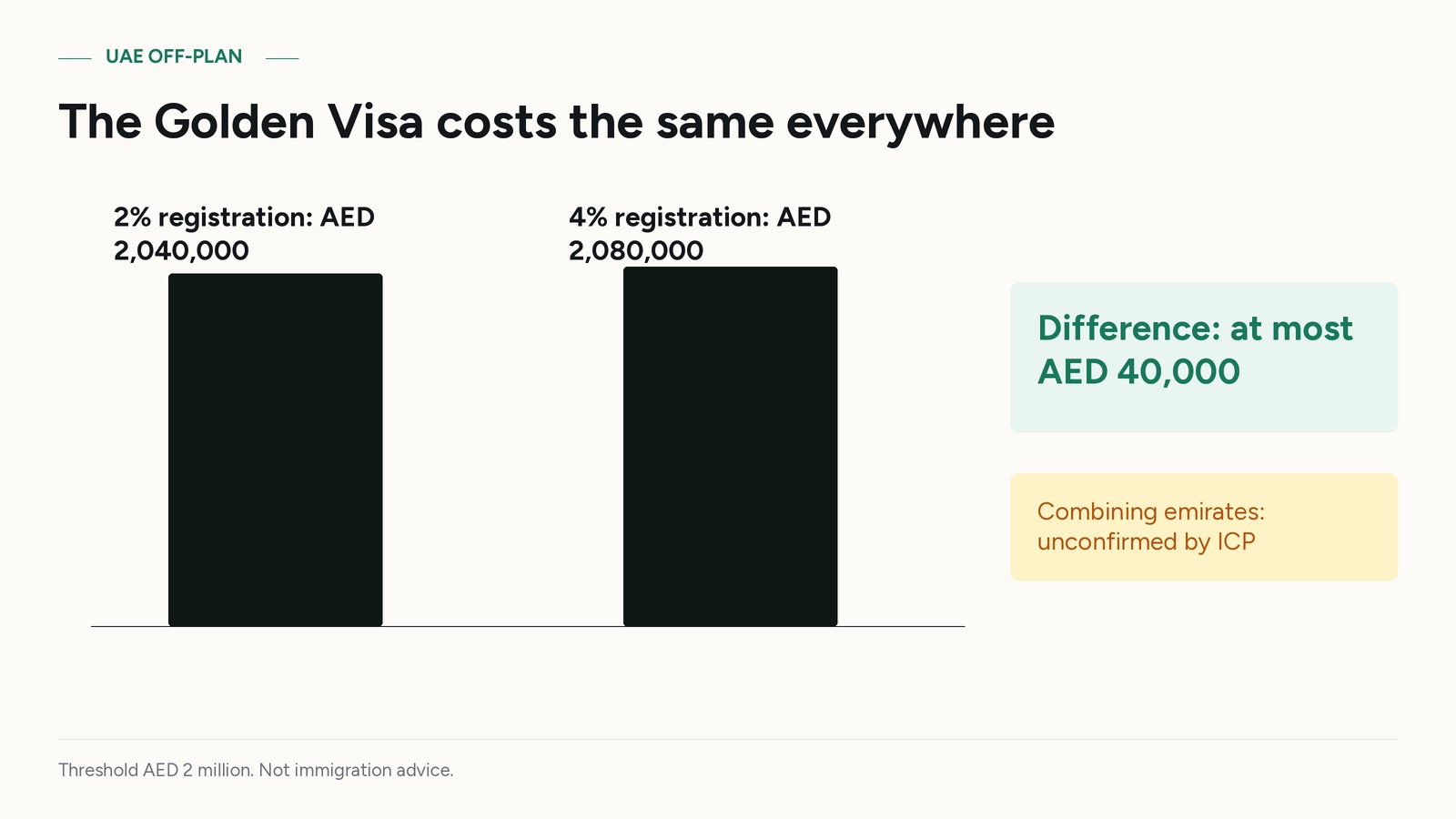
The Golden Visa is not a reason to split. The claim that property across emirates can be combined to reach AED 2 million might be right, but I could not trace it to ICP, and I would not split a purchase on the strength of it myself. Ask ICP first. And the idea that one emirate is a "cheaper" route to the visa is simply wrong: the threshold is the same everywhere.
And exit does not diversify either. The research notes that RAK has a thinner resale market and no public price register. If you cannot see the price series, you are not diversifying your exit risk. You are adding to it.

What I take from it
Two things.
Check that your numbers are the same kind of number before you compare them. I did not, for years, and I suspect most people in this market do not. Gross against net, dated against undated, a building against a community average. Most bad property decisions I have seen start with two numbers placed side by side that should never have met.
And name the trade. Diversification is good. Diversification sold as extra yield is a mislabel. I would rather tell a client "this will cost you about a point of yield and here is what you get for it" than let them find out later that the four coloured blocks paid less than one.
Nothing here is investment or financial advice. I am a licensed real estate broker, not a financial adviser, and the allocation is always the buyer's call. My job is to make sure the numbers behind it are real.
Idris Dad writes about off-plan strategy across Dubai, Abu Dhabi, Sharjah and Ras Al Khaimah.
More on how I work with buyers at offplancrypto.com.
Nothing here is investment or financial advice. I am a licensed real estate broker, not a financial adviser, and no developer or project is named.