September 2026
The line I had never looked at
I sat down this week to work out, properly, what a rental yield in this market actually is once everything is paid. Not the brochure number. The one that lands.
I built the table the way I would for a client. Rent at the top. Service charge, management, maintenance, empty months. Net rent. Then the bottom of the fraction: price, plus the land department fee, plus the admin, plus the agency commission.
That last line stopped me for a second. Two per cent plus VAT. On a million dirham apartment, twenty-one thousand. It sits in the buyer's cost base and it lowers their yield, every year they hold.
It is my line. I earn it.
I am not about to apologise for being paid, and on the example it costs just under a tenth of a yield point, about the same as the whole Abu Dhabi fee saving I come to below, which is not the thing that decides anyone's return. But I had quoted yields to people for years without once putting my own fee into the calculation in front of them. I did not hide it. I just never showed where it went. And a number you never show is a number the other person never weighs.
So this piece starts there.
What the table says
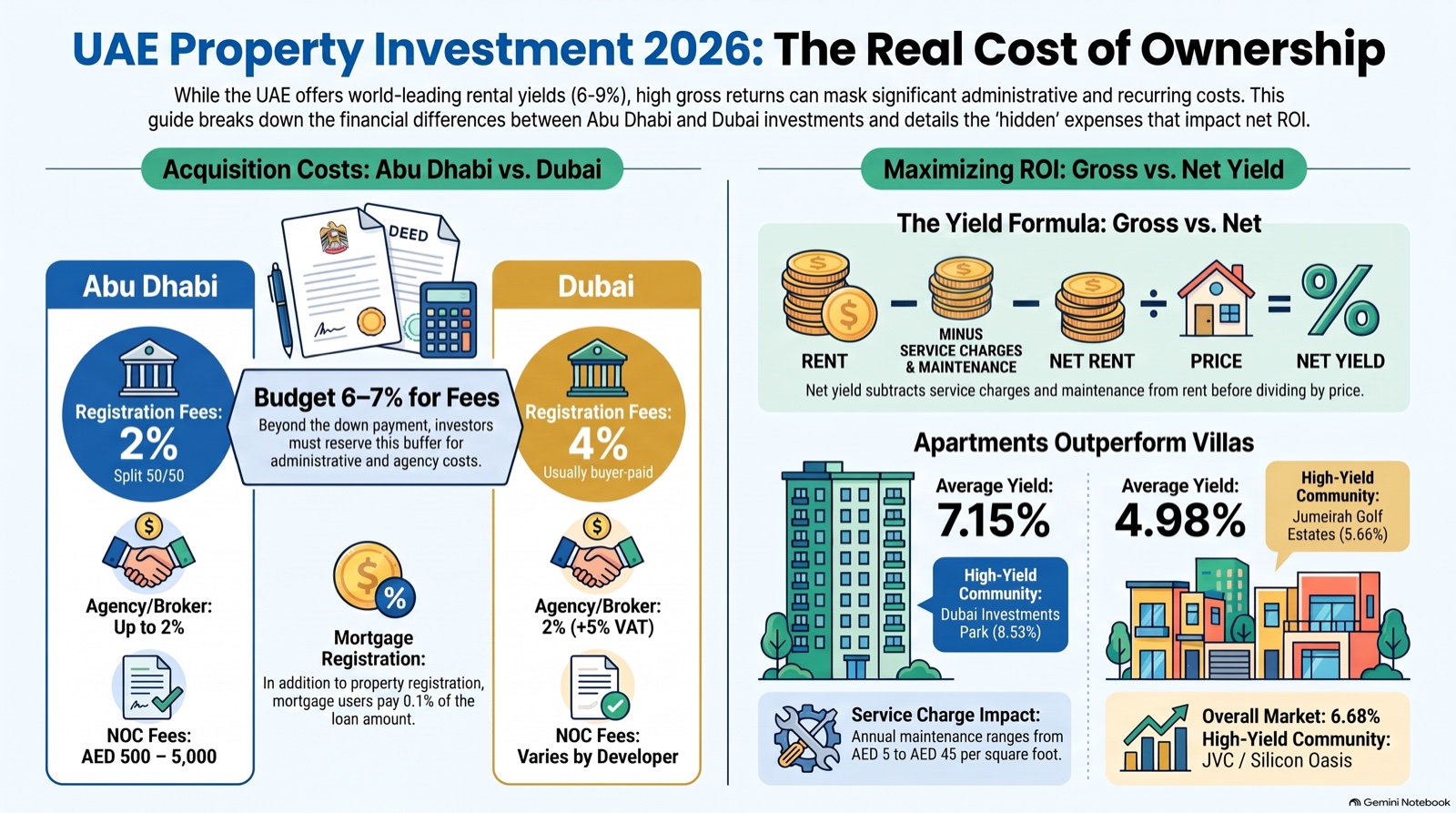
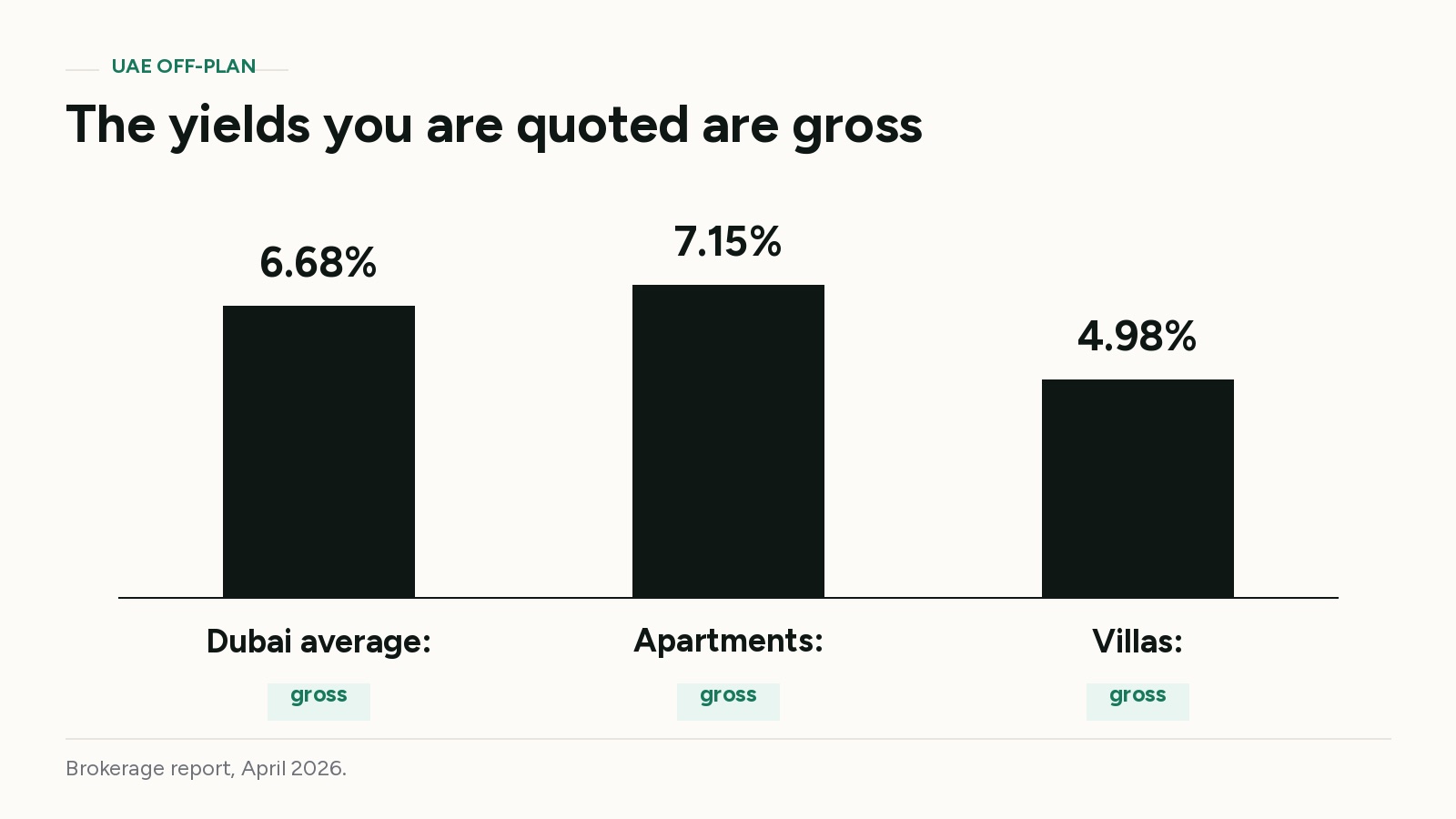
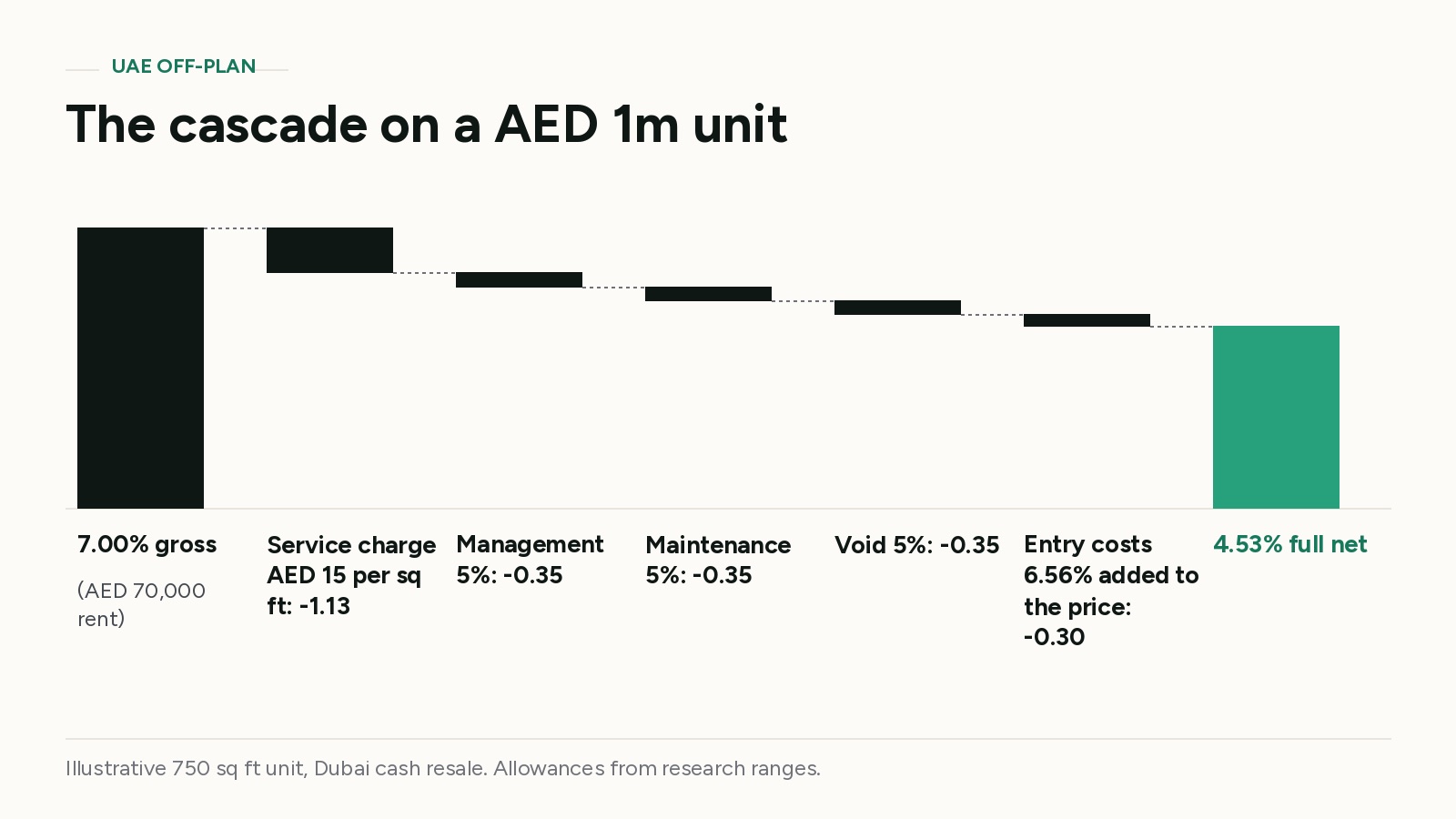
An illustrative unit. A million dirhams, 750 square feet, seventy thousand a year in rent. Seven per cent gross, a little below the Dubai apartment average in the market reports this spring.
Take off a mid-range service charge at fifteen dirhams a square foot. Five per cent for management, five for maintenance, five for empty months. Net rent is forty-eight thousand two hundred and fifty.
Divide it by what it actually cost to own the thing, price plus about sixty-five and a half thousand in purchase costs as a resale through an agent in Dubai.
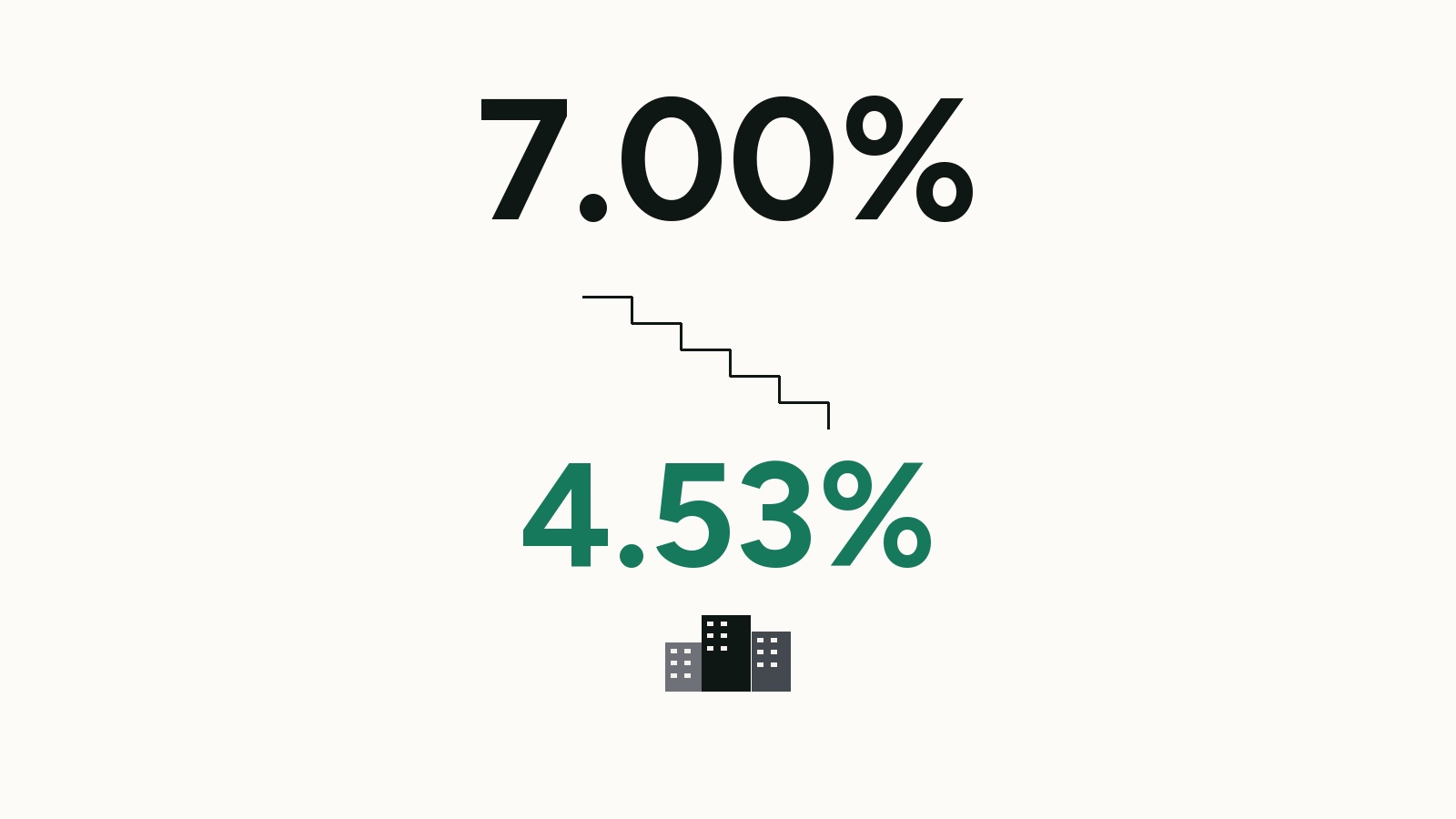
Four point five three per cent.
Seven gross, four and a half net. Nothing exotic happened. No bad tenant, no special assessment, no broken lift. Just the ordinary costs of owning a flat that somebody else lives in.
The first time I saw that gap laid out on one page I was not surprised by it, exactly. I knew the pieces. I had never added them up in the same place.
The thing I used to say about Abu Dhabi
Here is the part I am less comfortable with.
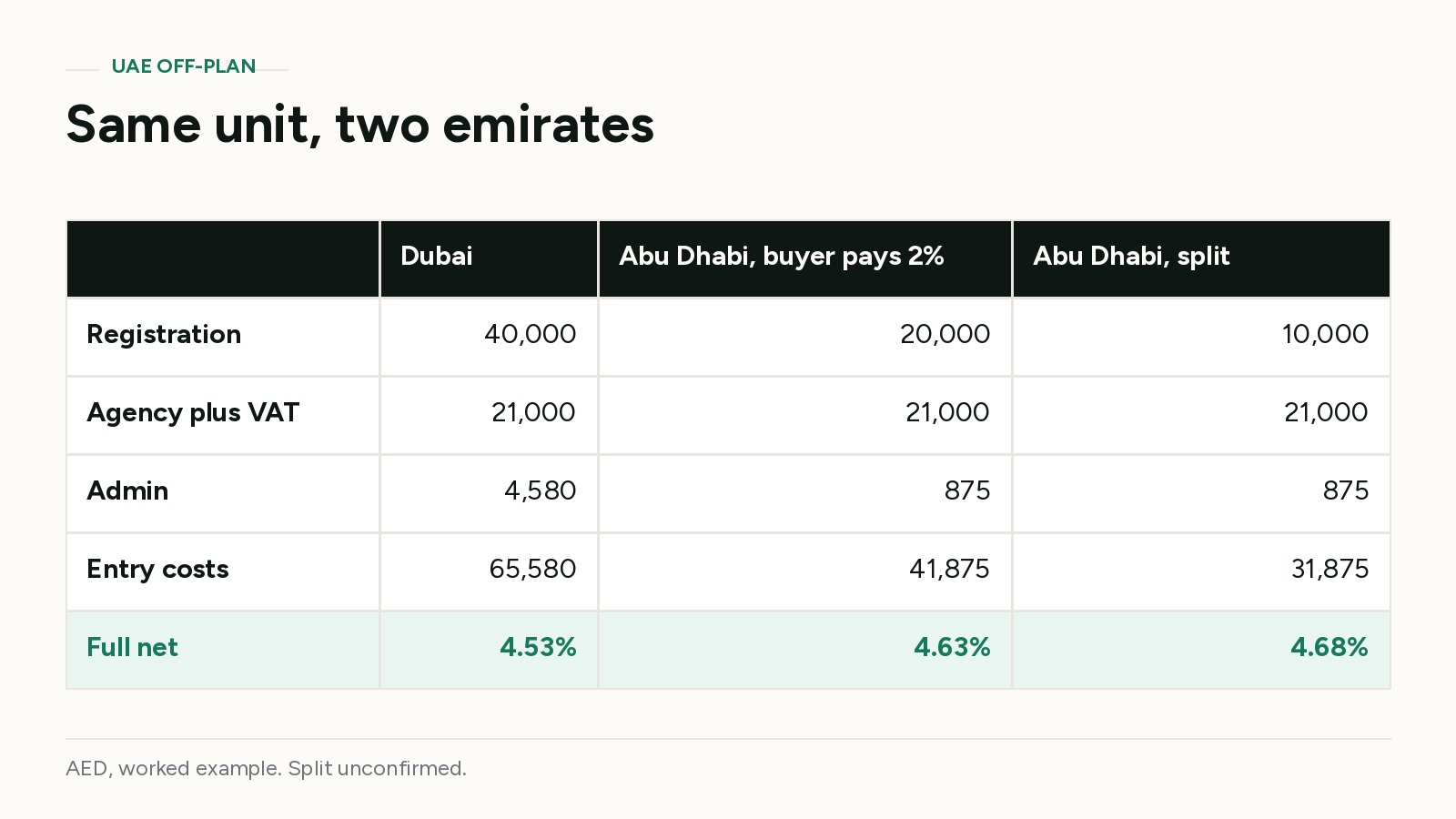
I have said, more than once, that Abu Dhabi's purchase fees are half of Dubai's. It is true. Two per cent registration against four. I have said it in a way that let it sound like a reason to prefer one emirate over the other.
So I moved the same unit to Abu Dhabi. Same price, same rent, same running costs, only the fees changed.
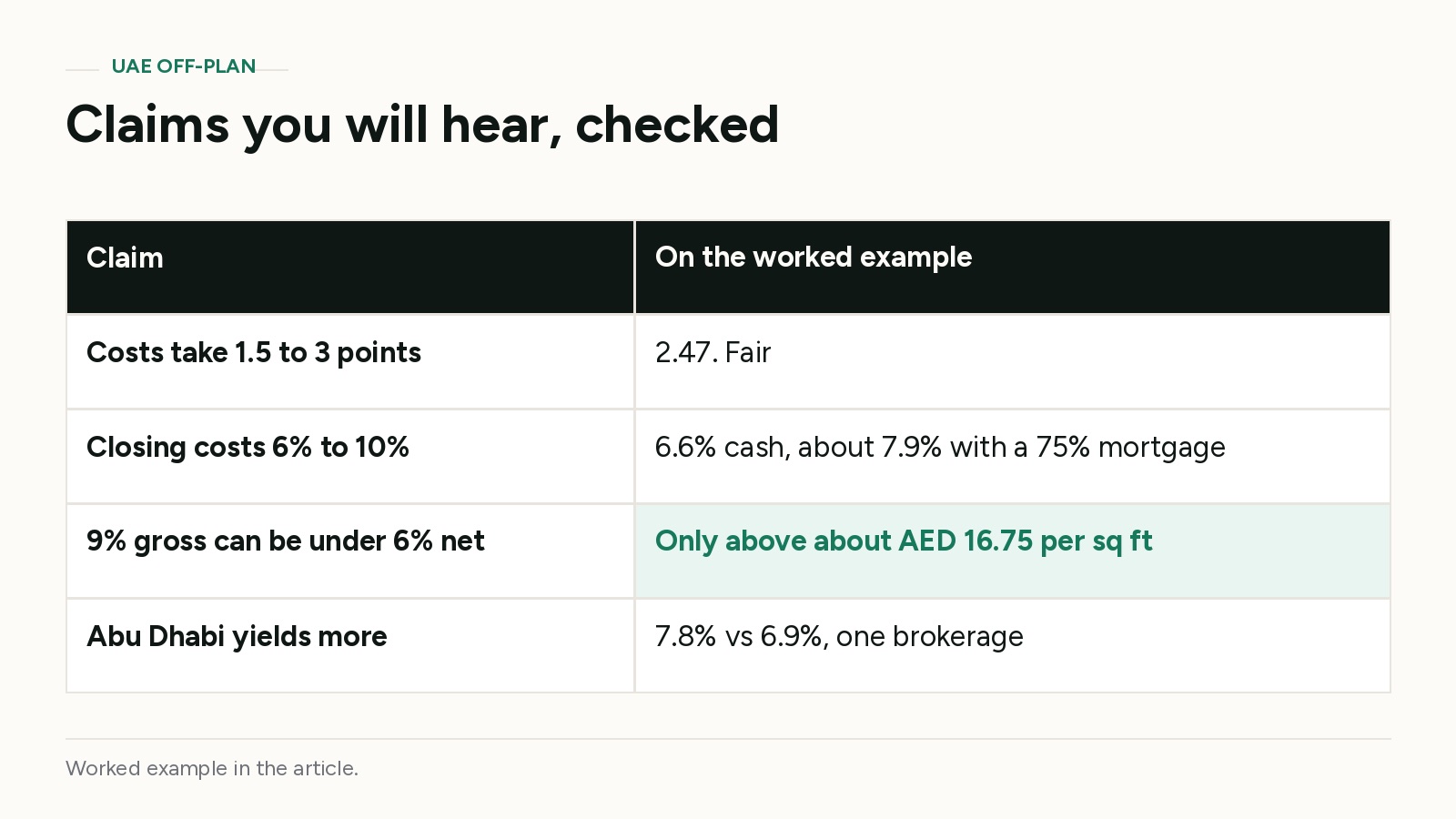
Full net goes from 4.53% to 4.63%. If the reported split with the seller applies, 4.68%.
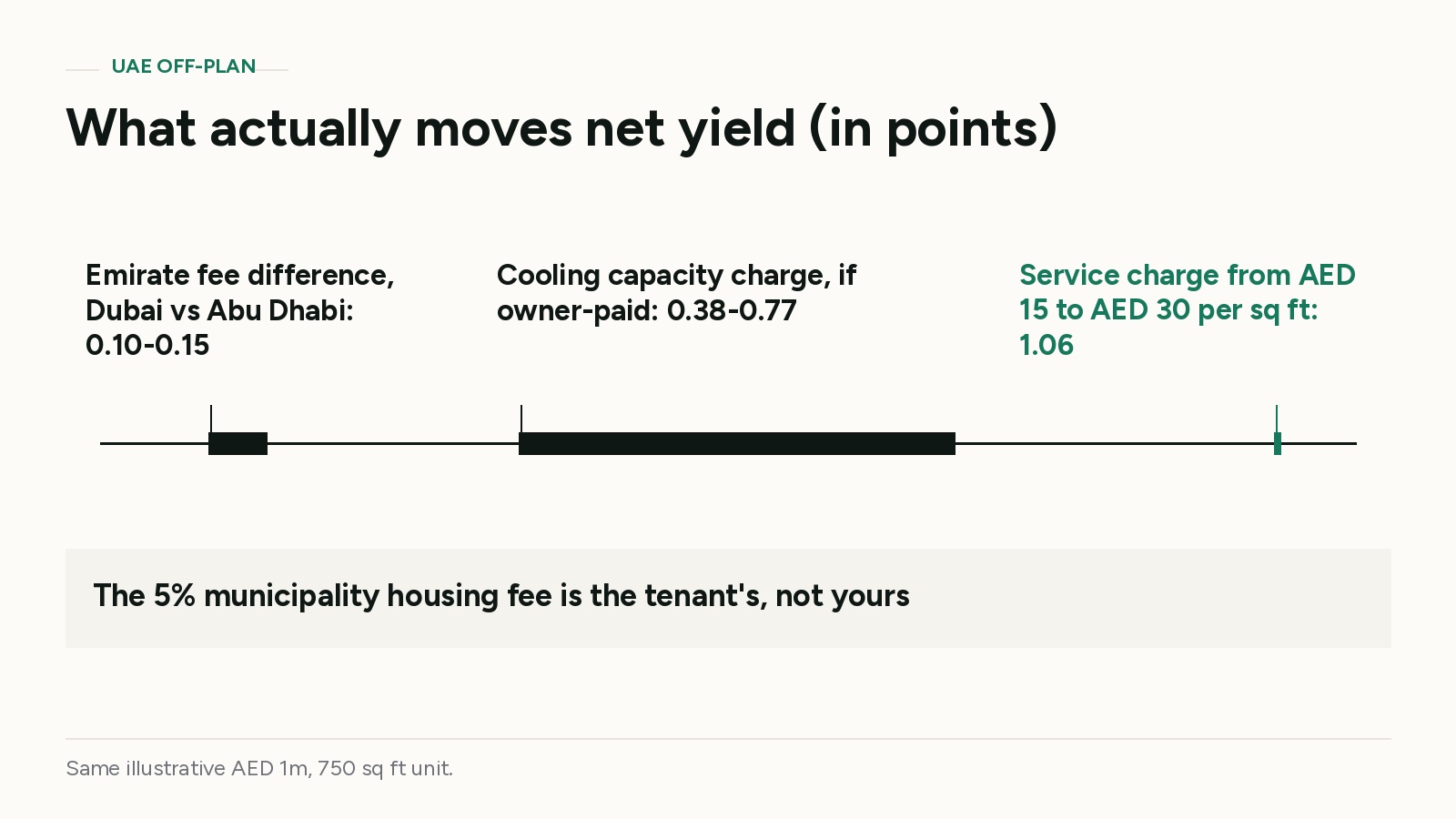
A tenth of a point. On a one million dirham purchase, the saving is about twenty-four thousand dirhams, which is real money, around four months of rent. But it is paid once and spread over every year you hold. As a return, it is a rounding difference.
I was not wrong about the fee. I was wrong about what it meant, and I was repeating the version that sounds like an argument.
What does matter
Two things, and neither is the emirate.
The service charge. The ranges I found run from low single digits to over thirty dirhams a square foot in Abu Dhabi, and to forty-five in Dubai's most expensive towers. On this unit every five dirhams is about a third of a yield point. The spread inside one emirate is several times the gap between the two.
And the cooling. Buildings on district cooling can carry a fixed annual capacity charge, reported at four to eight thousand dirhams on an Abu Dhabi one-bedroom, whether or not anybody turns the air conditioning on. If the owner carries it, it costs more yield than the whole Abu Dhabi fee saving, several times over.
And the question I could not answer from anything I read: who carries it, on a let unit. It depends on the lease. It depends on the building. The owner pays it while the flat is empty. I now think that question belongs on the first page of any conversation about an Abu Dhabi unit, and about any district-cooled Dubai one, and it has not been on mine.
A small correction for the market
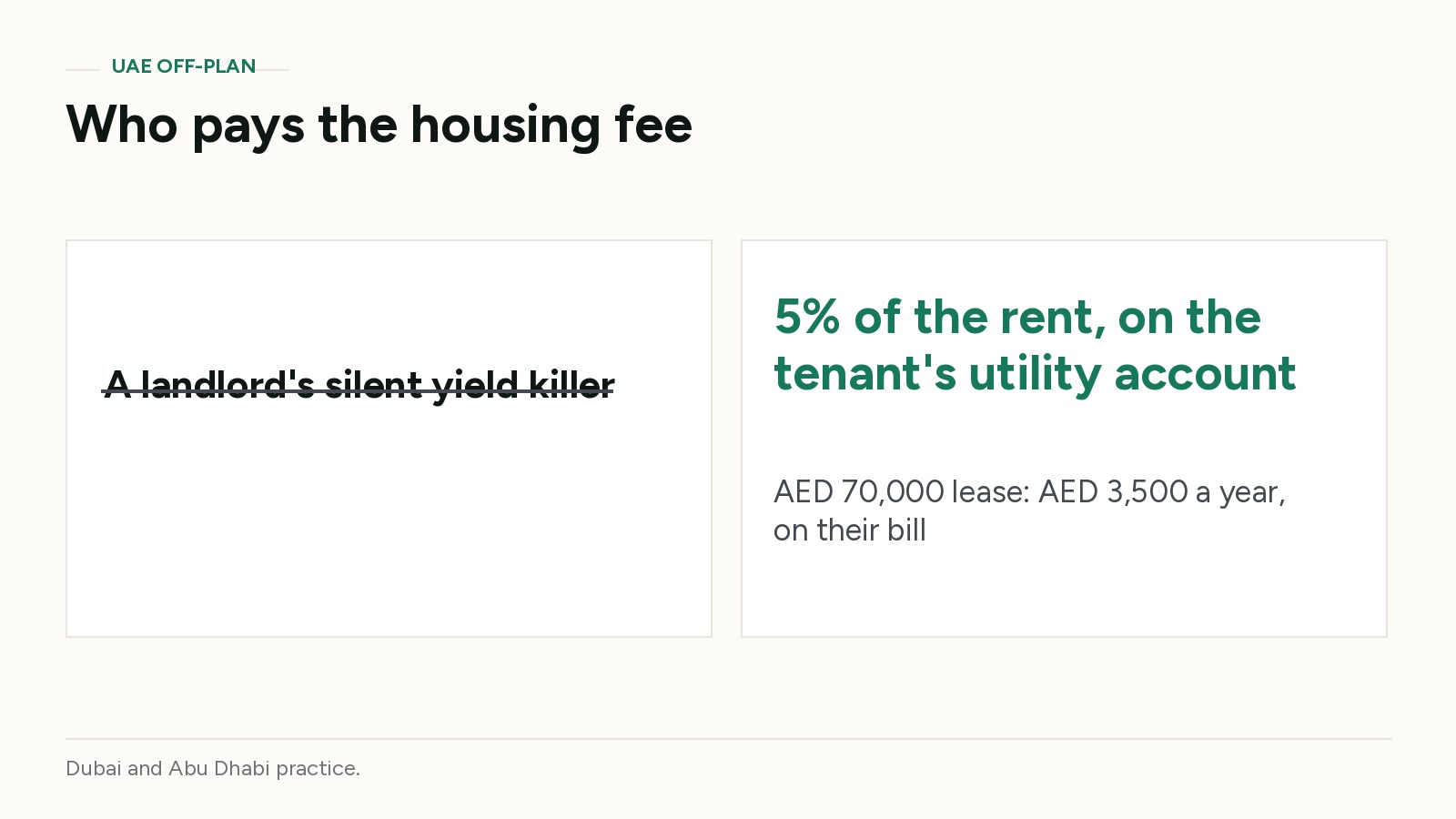
The five per cent housing fee shows up in guide after guide as a landlord's hidden cost. It is charged on the tenant's rent and collected on the tenant's utility bill. It is not yours.
I mention it because it is a tidy example of how this market's knowledge gets made. Somebody writes a list of costs. Somebody else copies the list. Nobody asks whose bill it lands on. A research tool reads all of them and repeats it with a citation, which makes it look checked.
What I am changing
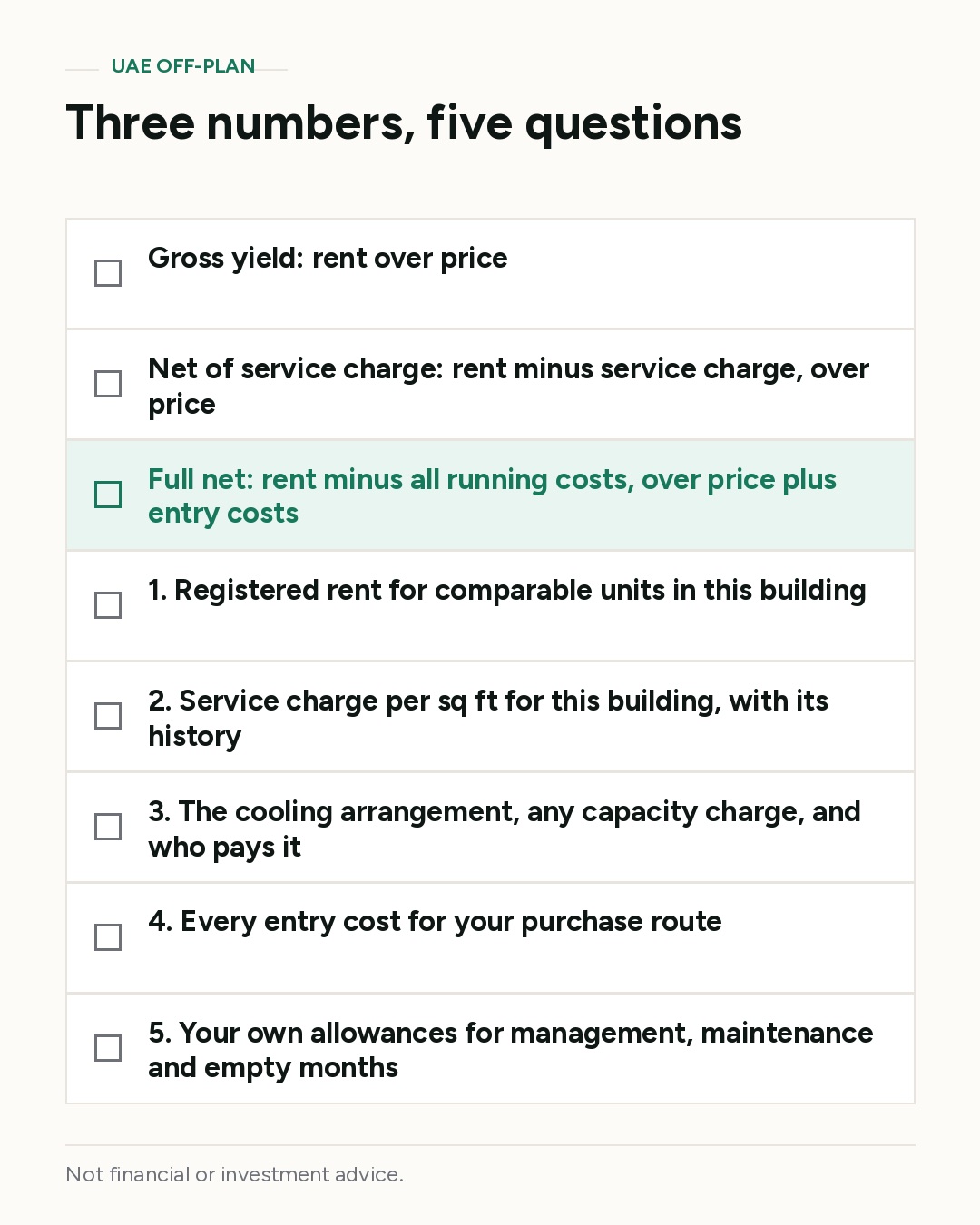
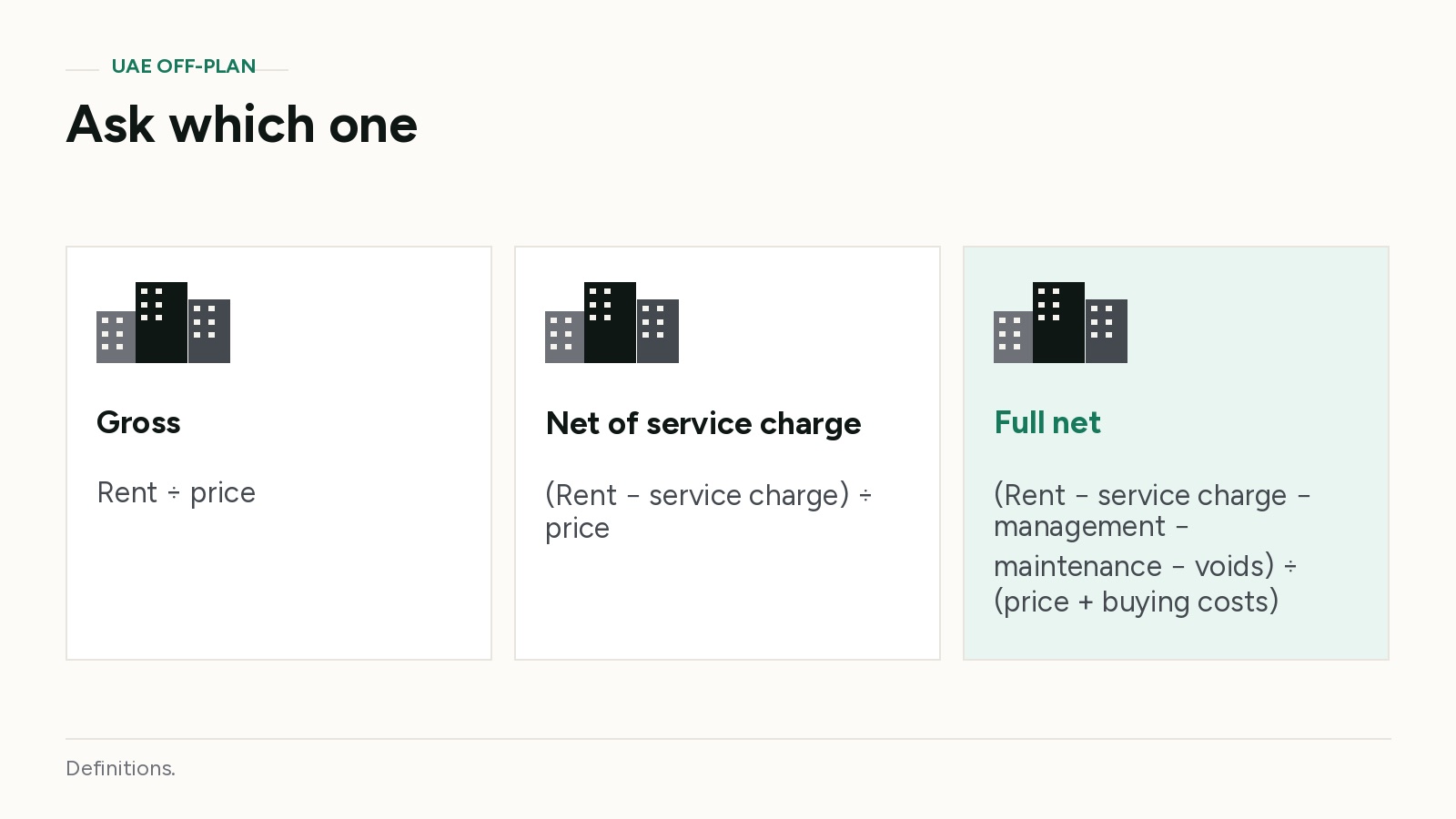
Three numbers, every time. Gross, net of service charge, full net. Named, so nobody confuses them.
Every line in the cost base shown, including mine.
And one question before any other when a unit is on district cooling: what is the capacity charge, and who pays it under this lease.
That is it. None of this is advice, I am a broker and not a financial adviser, and a table is not a decision. But the table is the part I can do, and I had been doing half of it.
What I take from it
The number people repeat is usually the one that is easiest to compute. Gross yield needs two figures from a listing. Full net needs a service charge from an index, a lease clause, an honest allowance for empty months and the buyer's own purchase costs. So gross travels and full net does not. That is not anybody's scheme. It is friction, and friction decides what a market believes.
And if you are going to show someone a cost base, show them all of it. Especially the lines that pay you. Especially those.
Idris Dad writes about off-plan strategy across Dubai, Abu Dhabi and Ras Al Khaimah.
More on how I work with buyers at offplancrypto.com.
Nothing here is financial or investment advice. I am a licensed real estate broker, not a financial adviser, and no developer, building or business is named.