September 2026
Where I sit
I sell off-plan property. It is most of what I do, and the people who read this know it.
So I am the wrong person to tell you whether off-plan is better than ready stock, and I am not going to. What I can do is tell you how I used to answer the question, why it was the wrong answer, and what the question looks like when you put both routes on one piece of paper.
How I used to answer it
When someone asked me "off-plan or ready?", I led with the entry.
Ten per cent down against twenty-five. A booking against a mortgage application. It is an easy comparison to make, it is true as far as it goes, and it points one way.
I have done that more times than I can count. I do not think it was dishonest. But it was lazy, and this week I found out how lazy.
What the paper says
Take a two million dirham unit and cost it both ways, fees included, using numbers I have already checked in earlier pieces.
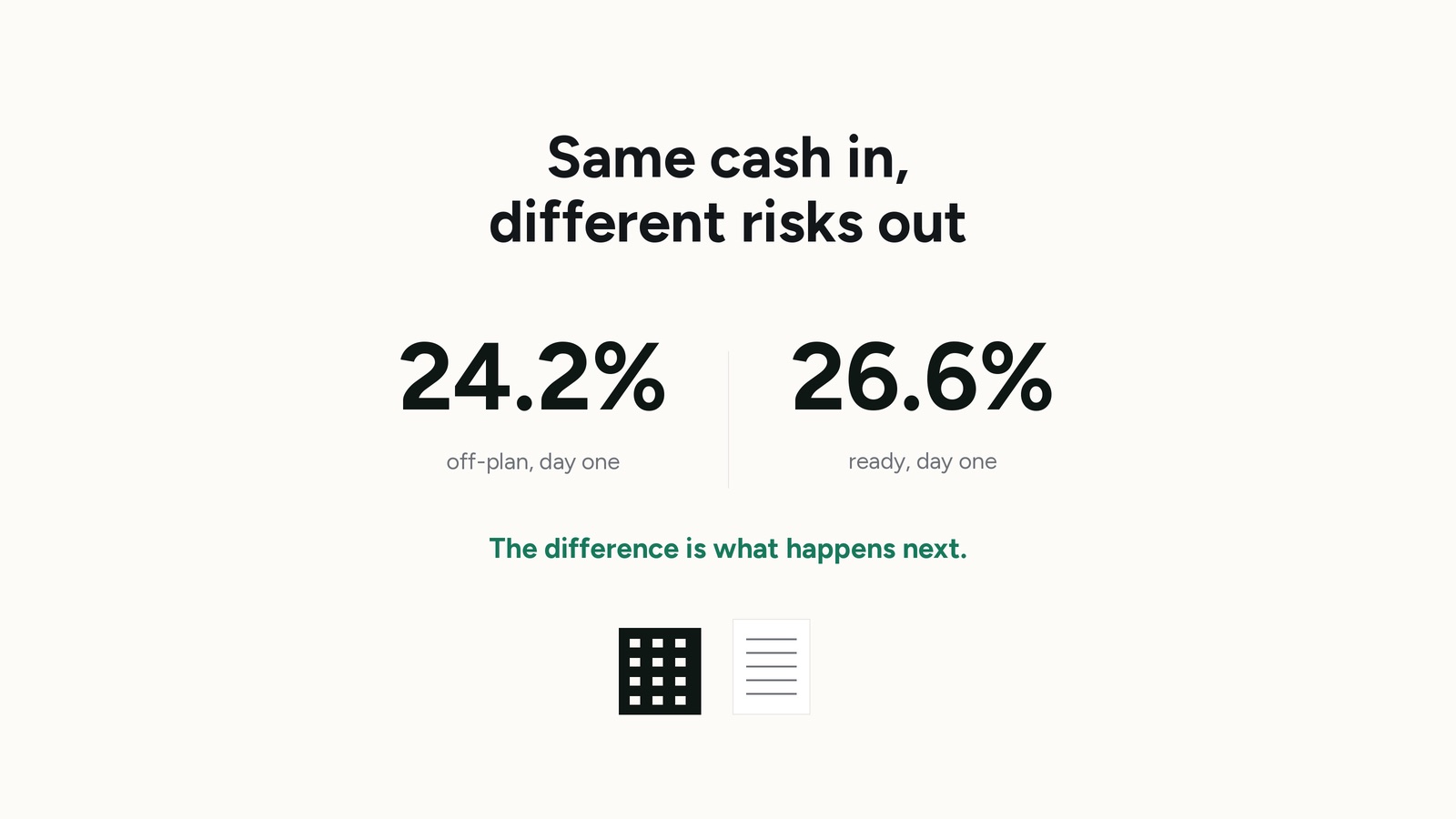
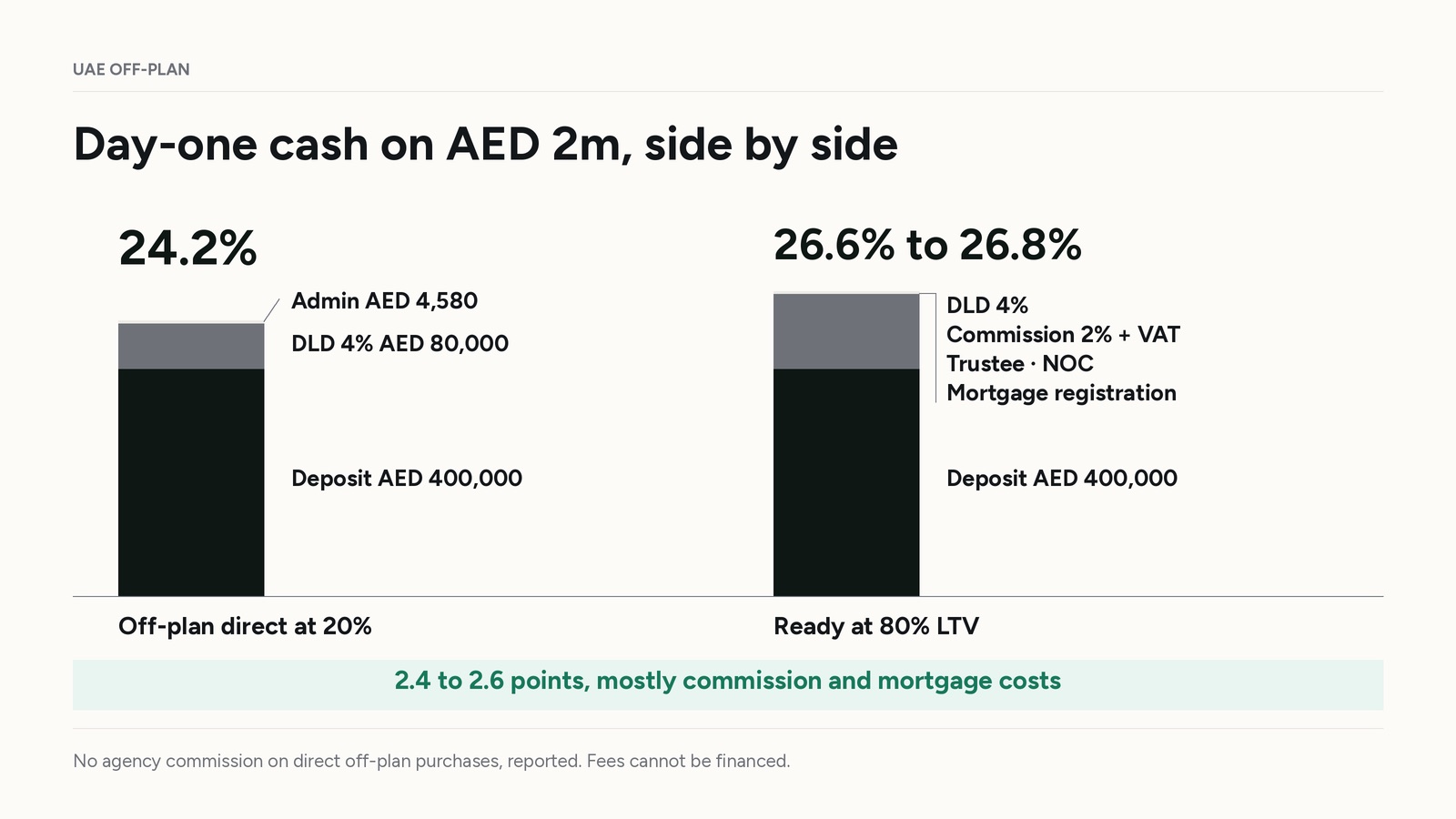
Off-plan, bought direct, twenty per cent booking: about AED 484,580 on day one. Twenty-four per cent of the price.
Ready resale, eighty per cent mortgage: about AED 531,570 to AED 536,070. Twenty-six and a half to twenty-seven per cent.
Two and a half points. Most of it is commission, which on a resale is my income, and mortgage registration.
That was the first uncomfortable thing. The difference I have been leading with for years is the smallest difference between the two routes. On a ten per cent booking it looks bigger, but that is not a cheaper purchase. It is the same two million dirhams with less of it paid yet.
The differences I was not leading with
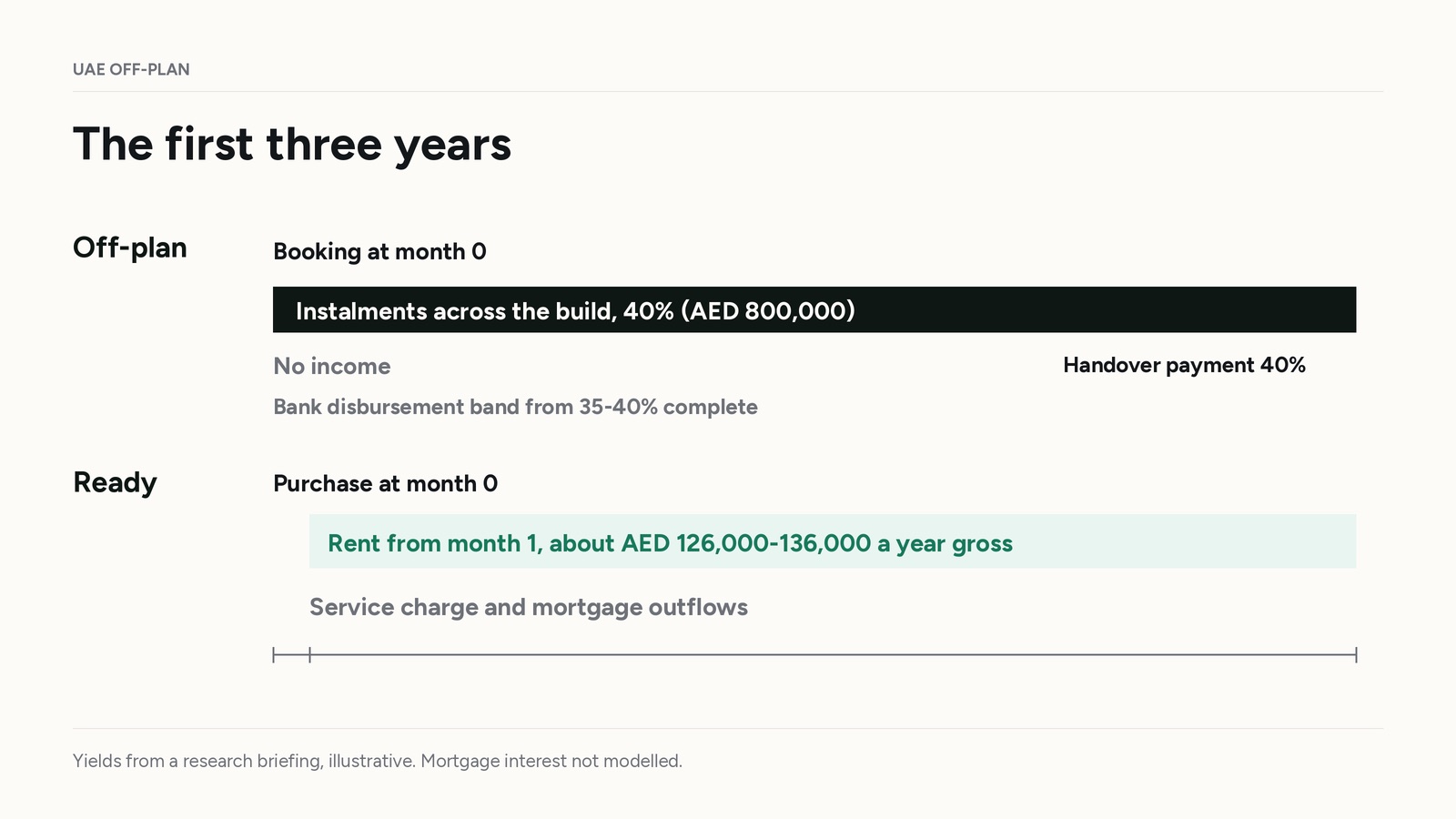
The second uncomfortable thing is what happens after day one, because that is where the routes actually split, and I had never put it on the same sheet as the booking.
The off-plan buyer keeps paying. Another forty per cent during the build on a typical plan, and no tenant. The ready buyer collects rent from the first month. At the middle of the gross yield range the research I used quotes for Dubai apartments, six and a half per cent, that is around a hundred and thirty thousand dirhams a year on two million. For every year of construction. And for every year of delay.
The ready buyer is not getting that for free. They pay a heavier fee layer, they carry a mortgage from day one, and they own a building that is already ageing, with a service charge that can take up to two points off the yield. I am not going to put a number on the interest because it will be wrong by the time you read this.
So the honest version of "off-plan or ready?" is not about the entry at all. It is about which set of risks you can carry for three years. A building that is not finished, with your money in it and no income coming out. Or a mortgage on one that is, with income coming out and costs coming out with it.
The claim I tested
The research ended with something it called an institutional playbook: hold most of your capital in off-plan and some in ready stock, and let the ready rent "offset" the off-plan instalments.
I have heard versions of this in sales meetings. I have probably said versions of it.
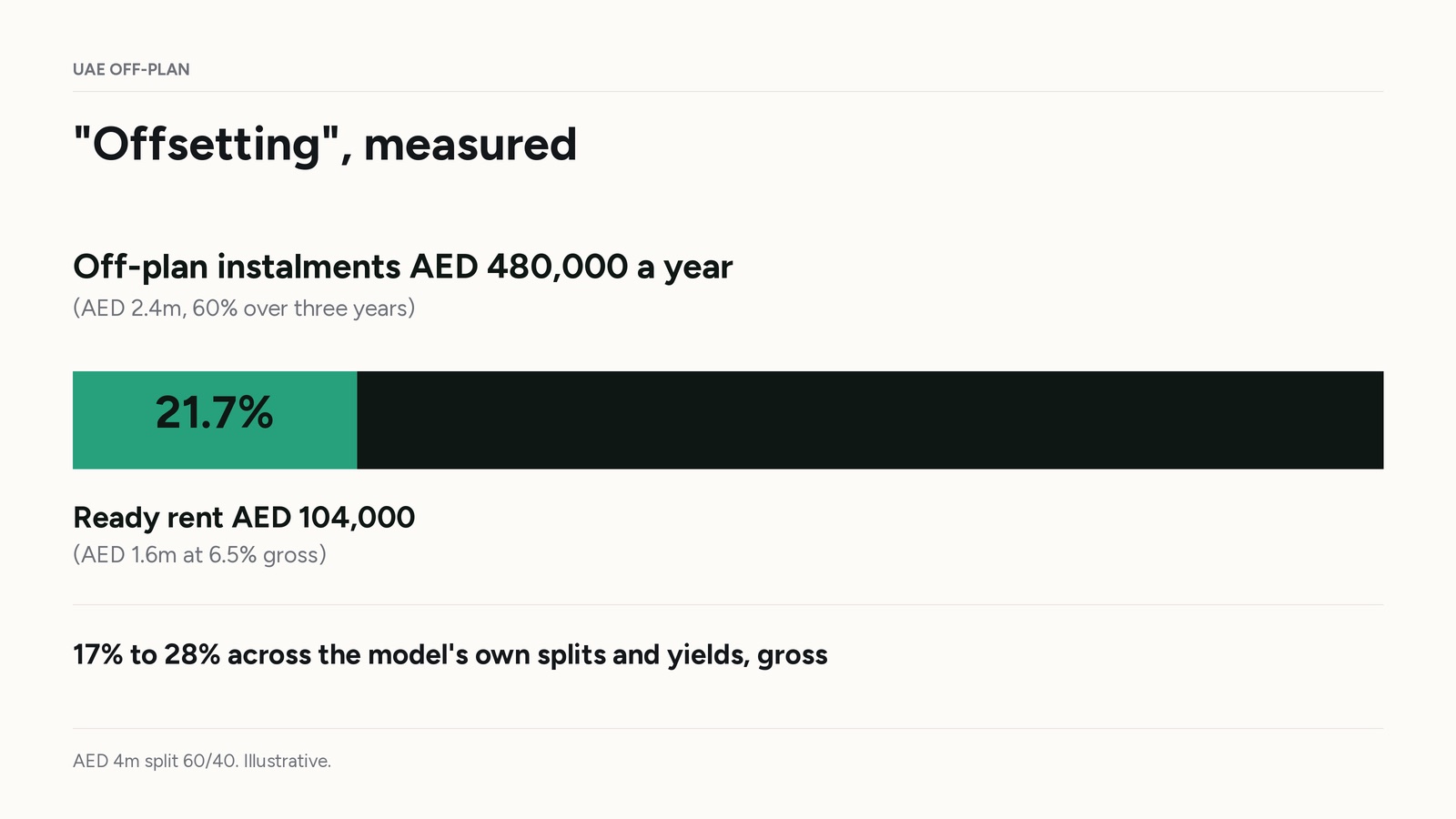
So I ran it. Four million dirhams, sixty-forty. The off-plan side asks for about four hundred and eighty thousand a year during the build. The ready side earns about a hundred and four thousand gross.
About twenty-two per cent. Across the research's own range, somewhere between a sixth and a bit over a quarter.
That is not offsetting. It is help. Anyone relying on the first word to plan their cash will find the gap in the third year.
Why I am not giving a verdict
Partly because of where I sit. If I told you off-plan was the better route, you would be right to discount it. If I told you ready was, you might wonder what I was compensating for.
But mostly because there is no general answer. There is a specific one, for a specific buyer, and it depends on three things the sales conversation usually skips. Do you need income now? Could you carry another year if the handover slips? And do you need to be able to sell before you have paid thirty or forty per cent, because until then, on most off-plan contracts, you cannot?
If the answers are yes, no and yes, off-plan is going to be hard for you, and I would rather tell you that than sell you a unit.
If the answers are no, yes and no, the lighter fee layer and the staged payments may suit you, and the ready buyer's mortgage and running costs are costs you do not need to take on yet.
Most people are somewhere in between, and the only way to find out where is to put both routes on the same paper.
What I take from it
Lead with the biggest difference, not the easiest one. The entry is easy to compare and it is the least important number. The rent not collected and the exit you cannot take are harder to put in front of someone, and they decide more.
And be most careful on the questions where you have a side. I sell one of these two products. That does not make me wrong about it. It does mean that when I am sure, I should check twice, and when I compare, I should cost both the same way.
I would rather lose a sale to a ready unit that suits someone than keep one that does not.
Idris Dad writes about off-plan strategy across Dubai, Abu Dhabi and Ras Al Khaimah.
More on how I work with buyers at offplancrypto.com.
Nothing here is financial, mortgage or investment advice. I am a licensed real estate broker, not an adviser, and I sell off-plan property. No developer, project or bank is named.